A water heater expansion tank is the small, football-sized tank that sits on the cold water line above many water heaters. It’s easy to ignore, but it does an important job: it gives heated water somewhere to go when it expands, so the pressure in your plumbing doesn’t spike every time the burner or elements turn on. If your home has a pressure regulator, a check valve or a backflow preventer, the plumbing code generally requires one.
This guide explains how a water heater expansion tank works, when California code calls for one, the warning signs that yours has failed, what installation typically costs, and how to size and set it correctly. It’s written for homeowners in Los Angeles, Orange County and the surrounding communities.

What This Guide Covers
- What a water heater expansion tank is and how it works
- Why thermal expansion is a problem in a closed system
- Do you need a water heater expansion tank? Code and local rules
- Signs your water heater expansion tank has failed
- Water heater expansion tank cost
- Sizing, pre-charge pressure and installation basics
- Tankless water heaters and expansion tanks
- Frequently asked questions
What is a water heater expansion tank?
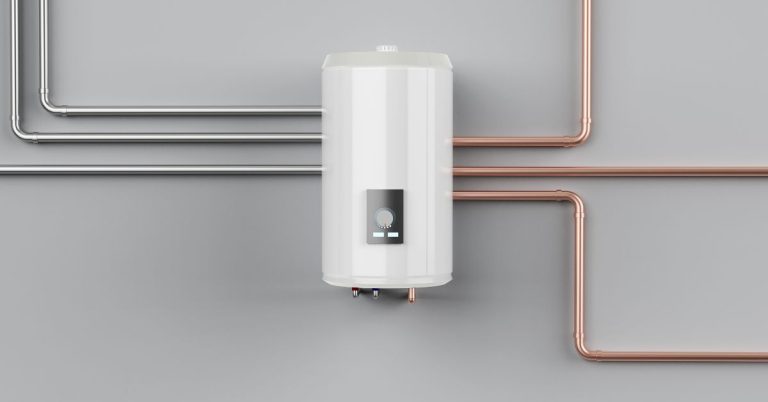
A water heater expansion tank is a small steel tank, usually 2 to 5 gallons, that connects to the cold water supply line feeding your water heater. Inside, a rubber bladder or diaphragm splits the tank into two chambers. One side holds pressurized air. The other side is open to your plumbing.
When the water heater warms a fresh tank of cold water, that water takes up more space. Instead of pushing pressure through every pipe, valve and fixture in the house, the extra volume flows into the water heater expansion tank and compresses the air cushion. When someone opens a hot water tap and pressure drops, the air pushes that water back into the system.
The parts you can see
- The tank itself: often gray, white or blue, mounted on a tee in the cold water line.
- The air valve: a tire-style valve under a plastic cap, used to check and set the air pre-charge.
- The connection: a threaded fitting on the bottom or end of the tank that joins the cold water pipe.
Why thermal expansion is a problem in a closed system
In an open system, expanding water can push back toward the city water main, so pressure stays fairly steady. Many homes are no longer open systems. A pressure regulator (PRV), a check valve or a backflow preventer lets water in but stops it from flowing back out. The plumbing code describes these as devices that prevent building pressure from dissipating back into the water main.
In a closed system, each heating cycle has nowhere to send the extra volume, so pressure climbs. Over time, those repeated spikes can strain faucet cartridges, toilet fill valves, supply hoses and the water heater itself. They can also make the temperature and pressure (T&P) relief valve open and drip, which is a safety device doing its job, not a fix.
Do you need a water heater expansion tank? California code and local rules
For most Los Angeles and Orange County homes, the answer depends on what’s installed on your water service line. The California Plumbing Code is based on the Uniform Plumbing Code, and Section 608.3 covers this situation. It says a water system with a check valve, backflow preventer or other normally closed device must have an approved, listed and adequately sized expansion tank or another approved device that controls thermal expansion. The tank goes on the building side of that valve.
A related rule, Section 608.2, deals with high street pressure. Where static pressure is too high, the code calls for a pressure regulator that reduces it to 80 psi or less. Once a regulator is in place, the system is closed, so the expansion rule above applies. Some cities spell this out in their local amendments. In Signal Hill, for example, the amended Section 608.2 says that when a pressure regulator is added, an approved expansion tank must be installed on the cold water side of the water heater.
Permits matter too. In the City of Los Angeles, the Department of Building and Safety (LADBS) lists replacing a water heater as express permit work, and permitted work is inspected. Each Orange County city runs its own building department, so check with yours before a replacement.
| Your setup | Is a water heater expansion tank (or approved device) needed? |
|---|---|
| Pressure regulator (PRV) on the main line | Yes. A PRV closes the system under code Section 608.3. |
| Check valve or backflow preventer on the service | Yes, on the building side of that device. |
| No PRV, check valve or backflow device | Usually not required, but a plumber should confirm nothing on the line closes the system. |
| Replacing your water heater | The installer and inspector will check whether your system is closed and size the tank to match. |
If you’re not sure whether your home has a regulator, look where the main water line enters the house, often near the hose bib in front. A bell-shaped brass valve with an adjustment screw on top is usually the PRV.
Signs your water heater expansion tank has failed (or is missing)
A water heater expansion tank doesn’t last forever. Cost guides from Angi and HomeGuide both put the typical lifespan at about 5 to 10 years. When the bladder fails or the air charge leaks out, the tank fills with water and stops absorbing anything. Watch for these signs:
- A dripping T&P relief valve: the valve on the side or top of the water heater opens or weeps after heating cycles.
- Pressure that jumps after the heater runs: a gauge on a hose bib or laundry valve reads noticeably higher after the burner shuts off.
- Running toilets and leaky faucets: fill valves and cartridges wear out faster under repeated pressure spikes.
- A tank that sounds full: tap the tank. A working tank sounds hollow near the top; a waterlogged tank sounds solid all the way up.
- Water at the air valve: if water comes out when you press the valve stem, the bladder has likely ruptured.
Amtrol, a major expansion tank maker, suggests a simple check: shut off the home’s water supply, open a hot water tap until the flow stops, then remove the cap from the air valve and check the pressure with a tire gauge. If the pressure is low, the tank should be replaced.
Some of these symptoms overlap with other water heater problems. If you see water around the base of the heater, our guide to diagnosing a leak at the base of the tank walks through each cause. If the heater is popping or knocking, read what each water heater sound usually means.
Water heater expansion tank cost
The tank itself is inexpensive. Most of a water heater expansion tank’s installed price is labor, plus any extra work such as adding a pressure regulator or correcting piping. Here is how two national cost guides break it down:
| Item | Angi | HomeGuide |
|---|---|---|
| Installed cost, typical range | $150 to $450 (average $325) | $300 to $800 (average $500) |
| Tank only | $40 to $200, depending on size | $30 to $200, depending on size |
| 2- to 4-gallon tank | $40 to $90 | $30 to $100 |
| 5-gallon and larger tank | $140 to $200 | $80 to $200 |
| Typical lifespan | About 5 to 10 years | About 5 to 10 years |
National averages don’t reflect Los Angeles and Orange County labor rates, so expect local quotes toward the middle or upper part of these ranges. The final price also depends on access, whether the tank needs a support strap or bracket, and whether other code items need attention at the same time.
When a pressure regulator is part of the job
High street pressure and a failing PRV often show up together with expansion problems. If your regulator needs to be replaced, The 5 Star Plumbing’s typical price for pressure regulator valve replacement is $600 to $2,000; the exact price is confirmed after the technician sees the job. A new or adjusted regulator is also the moment to check that the expansion tank is sized and charged to match.
If you’re replacing the whole water heater, The 5 Star Plumbing offers financing options, and current offers are listed on our promotions page.
Sizing, pre-charge pressure and installation basics
Sizing
Water heater expansion tank size depends on the heater’s capacity and your incoming water pressure. Larger heaters and higher pressure call for a bigger tank. Angi’s sizing table, for example, lists a 4- or 5-gallon tank for an 80-gallon heater at 80 psi. Most manufacturers publish a sizing chart, and an undersized tank won’t absorb enough volume to keep pressure in check.
Pre-charge pressure
This is the step most often skipped. Tanks ship with an air charge from the factory, but the manufacturer’s instructions say to adjust the pre-charge to equal the home’s incoming water pressure, and to do it before the tank goes on the line. Amtrol’s installation manual also says adjustments should be made at ambient temperature. A tank with the wrong pre-charge either fills with water too early or never takes any in.
Location and mounting
- Install the water heater expansion tank on the cold water supply, between the heater and the PRV, check valve or backflow preventer.
- Amtrol recommends mounting the tank vertically, connection facing down. Horizontal mounting is acceptable only when the tank is properly supported.
- Follow the manufacturer’s instructions. Signal Hill’s code amendment, for example, requires the tank to be installed that way.
DIY or call a plumber?
Swapping a failed water heater expansion tank on an existing tee is a manageable job for a handy homeowner who can shut off the water, relieve pressure, set the pre-charge with a tire pump and seal threads properly. Adding a tank where none exists means cutting into the water line, and in a permitted water heater replacement the installation will be inspected. Testing your static pressure, confirming the PRV works and sizing the tank correctly is where a licensed plumber earns the fee.
Tankless heaters: do they need a water heater expansion tank?
Tankless heaters hold far less water, so thermal expansion is smaller and a water heater expansion tank may seem unnecessary. The code language, however, applies “independent of the type of water heater used.” If your home has a PRV or check valve, ask your installer or local building department what they require for a tankless system rather than assuming you’re exempt.
The bottom line
A water heater expansion tank is a small, inexpensive part that protects every fixture in a closed plumbing system. If your home has a pressure regulator, check valve or backflow preventer, California code calls for one, and it needs the right size and pre-charge to work. If your relief valve drips, your pressure jumps after the heater runs, or your tank sounds full when you tap it, it’s time to have it checked.
The 5 Star Plumbing is a family-owned company with experience since 2006, California contractor license #1041772, and plumbers available 24/7. We handle water heater repair, pressure regulators and expansion tanks, and our water heater services in Los Angeles and Orange County cover tank and tankless systems alike. See our Los Angeles service area, call (888) 909-0120, or contact us online to schedule a visit.
Frequently asked questions: water heater expansion tank
Is a water heater expansion tank required in California?
It’s required when your water system is closed by a check valve, backflow preventer, pressure regulator or similar device. California Plumbing Code Section 608.3 calls for an approved, adequately sized expansion tank or equivalent device in those systems. If your home has none of those devices, one is usually not required, but your local building department makes the final call.
Where does a water heater expansion tank go?
On the cold water supply line to the water heater, on the building side of the PRV, check valve or backflow preventer. Manufacturers such as Amtrol recommend mounting it vertically with the connection facing down.
How long does a water heater expansion tank last?
Angi and HomeGuide both estimate about 5 to 10 years.
How do I know if my water heater expansion tank is bad?
Common signs are a dripping T&P relief valve, pressure that rises after the heater runs, a tank that sounds solid when tapped, or water coming out of the air valve. To check the air charge, shut off the water, drain pressure from a hot tap, and test the air valve with a tire gauge.
What should water heater expansion tank pressure be?
The air pre-charge should match your home’s incoming water pressure, set before installation and at room temperature. Measure your pressure with a gauge on a hose bib first, then adjust the tank with a tire pump or by releasing air.
How much does it cost to install a water heater expansion tank?
Angi puts a typical installation at $150 to $450, and HomeGuide lists $300 to $800 for replacement including installation. Expect local pricing in Los Angeles and Orange County to vary with access and any related work, such as a new pressure regulator.
Can a bad expansion tank cause low water pressure?
Not usually. A failed tank tends to cause pressure spikes, not low pressure. Low pressure throughout the house more often points to a failing regulator, a partly closed valve or a leak.
Do tankless units need a water heater expansion tank?
Tankless units hold much less water, but the code rule applies regardless of the water heater type. Ask your installer or building department what they require if your system has a PRV or check valve.
Sources: IAPMO — Code Spotlight: Section 608.3 Expansion Tanks · City of Signal Hill Municipal Code — Amended CPC Section 608.2 · LADBS — Information Bulletin P/GI 2020-003, Express Permits · Angi — Water Heater Expansion Tank Cost · HomeGuide — Expansion Tank Replacement Cost · Amtrol — FAQs · Amtrol — Therm-X-Trol Installation Manual