A sewer cleanout is the capped access pipe that lets a plumber reach your home’s main sewer line without pulling a toilet or cutting into a wall. Most homeowners never think about it until every drain in the house backs up at once. Knowing where your cleanout is, what it does and what a new one costs can save time and money when a clog hits, whether you live in Los Angeles, Orange County or the surrounding communities.
This guide explains what a cleanout looks like, where to find it, how plumbers use it, what the California Plumbing Code says about placement, and what installation typically costs, including The 5 Star Plumbing’s typical price.
What This Guide Covers
- What a sewer cleanout is and how it works
- Types of cleanouts
- Where to find the cleanout at your home
- What plumbers use the cleanout for
- What to do if sewage comes out of the cleanout
- California code rules and who owns the sewer lateral
- Sewer cleanout installation cost
- Frequently asked questions
What is a sewer cleanout and how does it work?
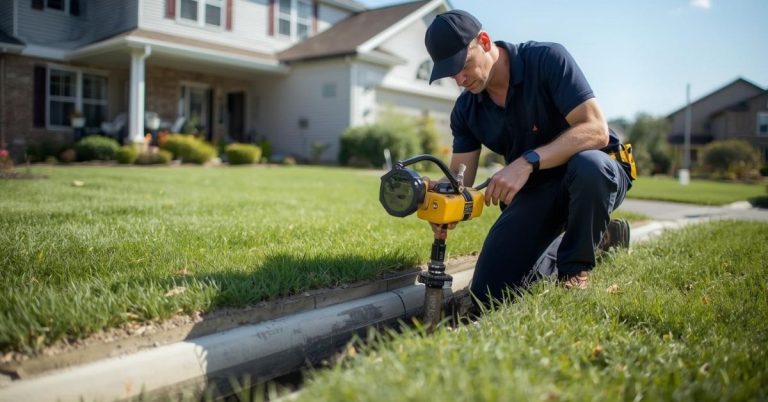
Every fixture in your home drains into one building drain, which leaves the house and becomes the building sewer, also called the sewer lateral. The lateral carries wastewater to the public sewer main under the street. A sewer cleanout is a vertical pipe connected to that line with a removable cap on top. Take the cap off, and a plumber has a straight path into the main line.
Angi describes a sewer cleanout as a pipe that provides access to your home’s sewer line, usually made of PVC or metal with a removable cap, and most often found outside the house. Without one, a plumber has to reach the main line through a toilet flange, a roof vent or a small fixture drain. Those routes are slower, add bends the cable has to fight through, and can mean pulling and resetting a toilet.
What a cleanout looks like
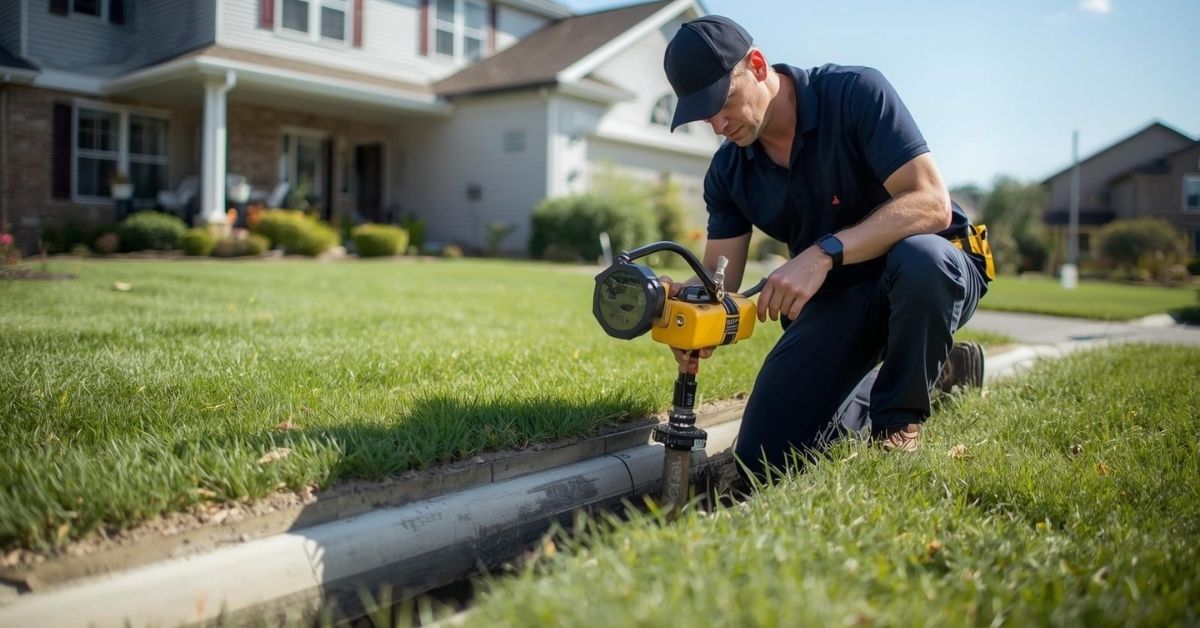
- A short, round pipe sticking a few inches out of the ground, a planter or a patio, usually near the foundation or between the house and the street
- A threaded cap or plug on top, often with a square or recessed nut for a wrench
- White or black plastic (PVC or ABS) on newer homes; cast iron with a brass plug on many older homes
- Sometimes the cap is stamped with “CO” or “S”, or sits under a small round cover plate or box set in concrete
Types of sewer cleanouts
Not every access fitting is the same. Here are the setups you are most likely to see in Southern California homes.
| Type | Where it is | What it allows |
|---|---|---|
| Single (one-way) cleanout | Near the house, at the end of the building drain | Access in one direction, usually toward the street |
| Two-way cleanout | Outside, usually on the lateral between the house and the street | Access both toward the house and toward the public sewer, so a plumber can clear either side |
| Interior cleanout | Inside the house: crawl space, garage, laundry area or under a sink | Access to a branch line or the main drain from indoors |
| Fixture or branch cleanout | On individual drain lines such as kitchen or laundry lines | Clearing one branch without going through the main |
A two-way cleanout is the most useful for main line work because a technician can run a cable or a camera in whichever direction the problem is. It is also the type Angi prices when it quotes cleanout installation, covered in the cost section below.
Where to find the cleanout at your home
Most homes in Los Angeles and Orange County have the main cleanout outside. Try these spots in order:
- Along the foundation on the side of the house closest to the street, especially near a bathroom or the kitchen.
- Between the house and the street, in the front yard, a planter strip or the driveway, roughly in line with where the lateral runs toward the street.
- Under a cover plate in a patio or driveway. Look for a small round metal or plastic lid.
- Inside in a crawl space, garage, basement or utility area if the house is older or built on a raised foundation.
Angi suggests a useful trick for homes on city sewer: find where the sewer main runs in the street (a manhole or curb marking can help), then walk back toward the house and scan the yard along that line. If the cleanout has been buried under landscaping or concrete, a plumber can locate the line with a camera and locator, then expose or add a cleanout.
Once you find it, keep it clear. Do not plant over it, pave over it or stack things on it. In an emergency, you want it reachable in seconds.
What plumbers use the cleanout for
The cleanout is the main entry point for most sewer line work. A good one makes these jobs faster and cleaner:
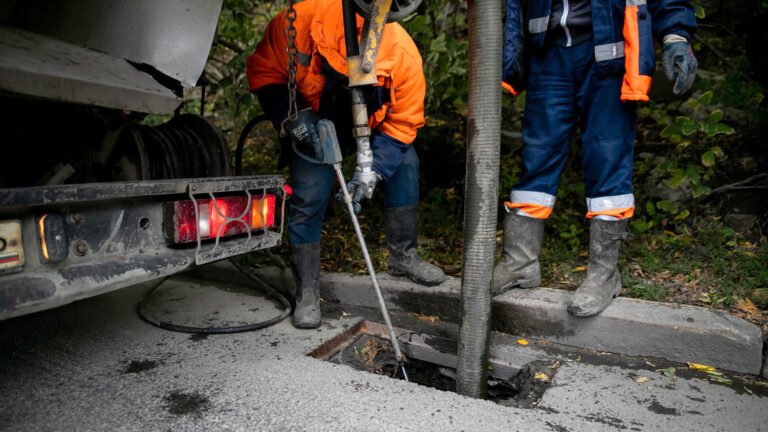
- Clearing main line clogs. A drain cable or rooter goes straight into the lateral instead of fighting through a toilet or a small fixture drain.
- Hydro jetting. The high-pressure hose needs direct access to the main line to scour grease, scale and roots from the pipe walls.
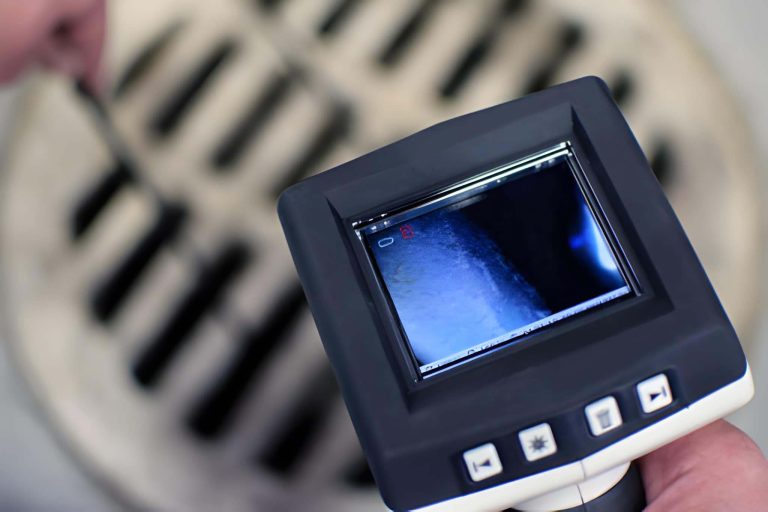
- Camera inspections. A sewer camera fed through the cleanout shows cracks, offsets, sags and root intrusion. If you are buying a home or dealing with repeat backups, read our guide on what a camera inspection of your sewer involves.
- Locating the line. A transmitter on the camera head lets the technician mark the depth and route of the lateral from above ground before any digging.
- Repair and replacement. Trenchless and traditional sewer line repair often starts and ends at a cleanout, which is why new cleanouts are commonly added during lateral repair work. A missing or cracked cap is worth replacing quickly, since an open riser lets debris and odors into the line.
Not sure your home has one? Our FAQ on the benefits of adding a cleanout covers why many older homes are upgraded.
What to do if sewage comes out of the cleanout
When several fixtures back up at the same time, for example the toilet gurgles when the washer drains or water comes up in the tub, the blockage is usually in the main line. The cleanout helps you tell where.
- Stop using water. Do not run fixtures, the dishwasher or the washing machine until the line is clear.
- Look at the cleanout before touching it. If water or sewage is already seeping from the cap, the line is full and pressurized. Do not remove the cap yourself.
- If the cap is dry, loosen it slowly with a wrench, standing to the side, only if you are comfortable doing so. Sewage pressure can push the cap off suddenly.
- Read what you see. If the pipe is full of standing water, the clog is downstream, between the cleanout and the street. If the pipe is empty, the clog is more likely between the cleanout and the house.
- Call a licensed plumber to clear the line and, ideally, run a camera to find the cause so the backup does not return.
Orange County’s private sewer lateral guide, produced by H2OC with the county’s sewer agencies, lists leakage from sewer cleanouts and broken or missing cleanout caps among the warning signs of lateral problems. If you see sewage spilling from a cleanout onto the ground, the same guide advises contacting your local sewer agency about the spill.
California code rules and who owns the sewer lateral
Where the California Plumbing Code requires cleanouts
Cleanout placement for new work and repairs in California follows the California Plumbing Code (CPC). Key rules in the 2025 edition include:
- Section 719.1: a building sewer cleanout must be placed inside the building near where the building drain connects to the building sewer, or outside at the lower end of the building drain and extended to grade.
- Section 719.1 also requires additional building sewer cleanouts at intervals not exceeding 100 feet in straight runs, and for each aggregate horizontal change in direction exceeding 135 degrees.
- Section 707.8: each cleanout must be above grade and readily accessible, unless installed under an approved cover plate.
- Section 707.9: cleanouts on piping larger than 2 inches need at least 24 by 24 inches of clear working space in front of them.
Your local building department enforces the adopted code and may have its own amendments, so a licensed plumber should confirm requirements and pull any required permit before installing or relocating a cleanout. Angi also notes that cleanout installation requires a licensed professional and a local building permit.
Who is responsible for the sewer lateral?
In most of Southern California, the homeowner owns the lateral. Los Angeles County Public Works states that sewer laterals in its sewer maintenance districts are entirely owned by the property owner they serve, and that the owner is responsible for the entire length of the lateral and for keeping it free of roots and grease. The City of Torrance and Orange County’s H2OC guide also place lateral maintenance on property owners, and the H2OC guide specifies the full length to the public sewer, including the sections under the sidewalk and street.
Los Angeles County Public Works also recommends that homeowners install a backflow preventer and a cleanout in the sewer lateral. A cleanout does not prevent problems by itself, but it makes maintaining a line you are responsible for much easier and cheaper.
Sewer cleanout installation cost
According to Angi, installing a two-way sewer cleanout typically costs $1,000 to $3,500, with an average of about $2,000, depending on materials and local permit costs. In Los Angeles and Orange County, The 5 Star Plumbing’s typical price for sewer cleanout installation is $450 – $2,000; the exact price is confirmed after the technician sees the job.
| Job | Typical market range | The 5 Star Plumbing’s typical price* |
|---|---|---|
| Sewer cleanout installation | $1,000 – $3,500 (two-way cleanout, Angi; average about $2,000) | $450 – $2,000 |
| Sewer camera inspection | $250 – $1,180 (Angi) | $180 – $500 |
*The 5 Star Plumbing prices are typical ranges; the exact price is confirmed after the technician sees the job.
What changes the price
- Depth and location of the lateral. A shallow line in open soil is quicker to expose than one deep under a driveway or patio.
- Digging versus concrete cutting. Breaking and patching concrete or pavers adds labor and materials.
- Pipe material. Tying a new fitting into old cast iron or clay pipe takes more work than connecting to existing plastic pipe.
- One-way or two-way fitting. A two-way cleanout uses a different fitting and gives access in both directions.
- Condition of the line. If the camera shows cracks or roots at the tie-in point, a section of pipe may need repair at the same time.
- Permits. Permit fees and inspection requirements vary by city.
Many homeowners add a cleanout when they already need main line work, such as clearing a stubborn clog or repairing a section of the lateral, because the access hole is already open. If the budget is a concern, The 5 Star Plumbing offers plumbing financing options, and you can check our current plumbing promotions.
The bottom line
A sewer cleanout is the fastest, cleanest way into your main sewer line. Find yours now, keep it accessible and replace a damaged cap before you need it. Angi puts two-way cleanout installation at $1,000 to $3,500, and The 5 Star Plumbing’s typical price is $450 – $2,000, confirmed after the technician sees the job. For cleanout installation and replacement, The 5 Star Plumbing is a family-owned, licensed plumbing company (CA License #1041772) with experience since 2006, available 24/7 across Los Angeles, Orange County and the surrounding communities. Call (888) 909-0120 or contact us to schedule service.
Frequently asked questions: sewer cleanout
What is a sewer cleanout?
It is a capped pipe connected to your home’s main sewer line that gives plumbers direct access to clear clogs, run a camera or jet the line. It is usually outside near the foundation or between the house and the street.
How do I find my sewer cleanout?
Check along the foundation on the side of the house facing the street, in the front yard along the path of the sewer line, under small cover plates in patios or driveways, and in crawl spaces or garages in older homes. If it is buried, a plumber can locate the line with a camera and locator.
Does every house have a sewer cleanout?
Not always. Many older homes were built without an accessible outdoor cleanout, or the cleanout was buried by later landscaping or concrete. The California Plumbing Code requires building sewer cleanouts in new work, so one is commonly added during sewer repairs.
Can I open the sewer cleanout myself?
You can carefully loosen a dry cap to check for standing water, standing to the side. If sewage is already leaking from the cap, leave it closed and call a plumber, because the line is under pressure.
How much does it cost to install a sewer cleanout?
Angi lists $1,000 to $3,500 for a two-way cleanout, with an average of about $2,000. The 5 Star Plumbing’s typical price for sewer cleanout installation in Los Angeles and Orange County is $450 – $2,000; the exact price is confirmed after the technician sees the job.
Who is responsible for the sewer cleanout and lateral?
In Los Angeles County and Orange County, the property owner is generally responsible for the private sewer lateral up to the public sewer, including the part under the sidewalk and street. The cleanout sits on that private line.
Why is water coming out of my sewer cleanout?
Water or sewage at the cleanout usually means a blockage in the main line downstream, between the cleanout and the public sewer. Stop using water in the house and call a plumber to clear the line.
Sources: Angi: What Is a Sewer Cleanout and How Does It Work? · California Plumbing Code (2025), Sections 707 and 719 · Los Angeles County Public Works: Homeowner Sewer Responsibility · H2OC: A Property Owner’s Guide to Private Sewer Laterals (Orange County) · City of Torrance: Sewer Lateral Policy