Panic rising as water spills onto your bathroom floor? An overflowing toilet is every homeowner’s nightmare, and every second counts. Water is gushing out, your floor is flooding, and you’re frantically searching for answers. Before you grab your phone to call 911 or watch hundreds of dollars in water damage happen before your eyes, take a deep breath and follow this emergency guide.
This isn’t just another plumbing article—this is your step-by-step crisis playbook for stopping an overflowing toilet in the next 60 seconds, preventing thousands in water damage, and knowing exactly when you need professional help. Whether it’s 3 AM or the middle of Sunday dinner, this guide will walk you through exactly what to do right now.
THE FIRST 60 SECONDS: Stop the Overflowing Toilet NOW
When your toilet is overflowing, you don’t have time to read a novel. Here’s exactly what to do in the next minute to stop the flood:
SECOND 1-15: Turn off the water supply valve immediately. Look behind or beside your toilet near the floor. You’ll see a small oval-shaped valve where the water line connects to the wall. Turn it clockwise (to the right) as far as it will go. This cuts off the water supply instantly and stops the overflowing toilet from getting worse.
If the valve is stuck or won’t budge (this happens in older homes where valves rust in place), don’t waste time fighting with it. Move immediately to the next step.
SECOND 16-30: Open the toilet tank and stop the water flow manually. Quickly remove the toilet tank lid and set it aside somewhere safe—don’t worry about being gentle, time matters more than the lid right now. Inside the tank, you’ll see a rubber flapper valve at the bottom center. Press down firmly on this flapper to stop water from flowing into the bowl.
SECOND 31-45: Lift the float to prevent tank refilling. While holding the flapper down (or after you’ve secured it), locate the float mechanism. This is either a ball attached to an arm or a cylinder that slides up and down. Lift it up to stop the tank from refilling with water. Hold this position.
SECOND 46-60: DON’T FLUSH AGAIN. Your instinct might tell you that flushing will somehow help clear the overflowing toilet. It won’t. Flushing again will only dump more water into an already overflowing bowl and make the flood catastrophically worse.
Pro tip: If you can’t reach the shut-off valve while holding the float, let go and turn off the valve as fast as possible. The brief additional overflow is better than the continuous flood you’ll get if you can’t shut off the water.
CRITICAL: Contain the Damage in the Next 2 Minutes
You’ve stopped the water flow. Now prevent the water damage from spreading before it ruins your floors, walls, and spreads to other rooms.
Grab every towel you can find and create barriers at bathroom doorways to prevent water from flowing into hallways, bedrooms, or down stairs. Old towels work best since you won’t want to use them again after they’ve soaked up toilet overflow water.
Start removing standing water immediately. Use whatever you have:
- A wet/dry vacuum is ideal if you have one accessible
- Mop and bucket for larger amounts
- Thick towels for absorption
- Even a dustpan can scoop water into a bucket in an emergency
Move everything off the bathroom floor including rugs, bath mats, scales, trash cans, and anything else that could absorb contaminated water. The faster you remove items, the less you’ll have to throw away later.
Don’t let water sit. Even 10 minutes of standing water can seep into grout, under baseboards, and beneath flooring. The clock is ticking on water damage that could cost thousands to repair.
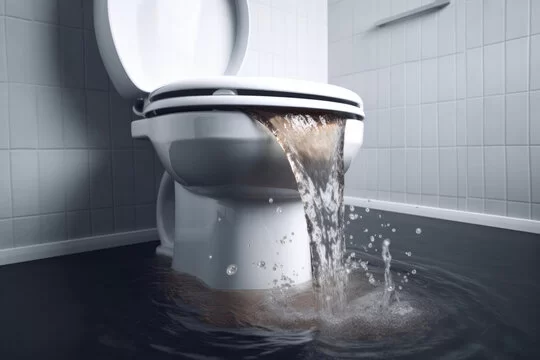
Why Is Your Toilet Overflowing? Identifying the Cause
Understanding what’s causing your overflowing toilet helps you fix it correctly and prevents it from happening again. Here are the most common culprits:
A clogged toilet drain accounts for 85% of overflowing toilet emergencies. Too much toilet paper, “flushable” wipes (which aren’t actually flushable), feminine hygiene products, cotton swabs, or items that kids flush (toys, crayons, you name it) create blockages that prevent water from draining. When you flush, the bowl fills faster than it can empty, and you get an overflowing toilet.
Main sewer line blockage is more serious and affects multiple drains in your home. If your toilet is overflowing but you haven’t flushed it recently, or if sinks and showers are also backing up, you likely have a main line clog. Tree roots, collapsed pipes, or major blockages in the city sewer connection cause this problem. This absolutely requires professional help.
Faulty flapper valve causes continuous water flow from the tank to the bowl. If the flapper doesn’t seal properly after flushing, water keeps trickling or rushing into the bowl. Eventually, if there’s any blockage at all, this constant flow leads to an overflowing toilet.
Malfunctioning fill valve or float causes the tank to overfill, sending excess water into the overflow tube and down to the bowl. Combined with even a partial clog, this creates an overflowing toilet situation that seems to happen spontaneously.
Full septic tank creates backup that has nowhere to go except back up through your toilets. If you’re on a septic system and multiple toilets are overflowing or slow to drain, your tank probably needs pumping urgently.
Blocked vent pipes prevent proper drainage by disrupting the air pressure balance in your plumbing system. Without proper venting, water can’t flow down drains efficiently, leading to slow drainage and potential overflowing toilets.
How to Fix an Overflowing Toilet: Step-by-Step Solutions
Now that you’ve stopped the immediate crisis and identified the likely cause, here’s how to actually fix the overflowing toilet.
Method 1: Plunging (For Simple Clogs)
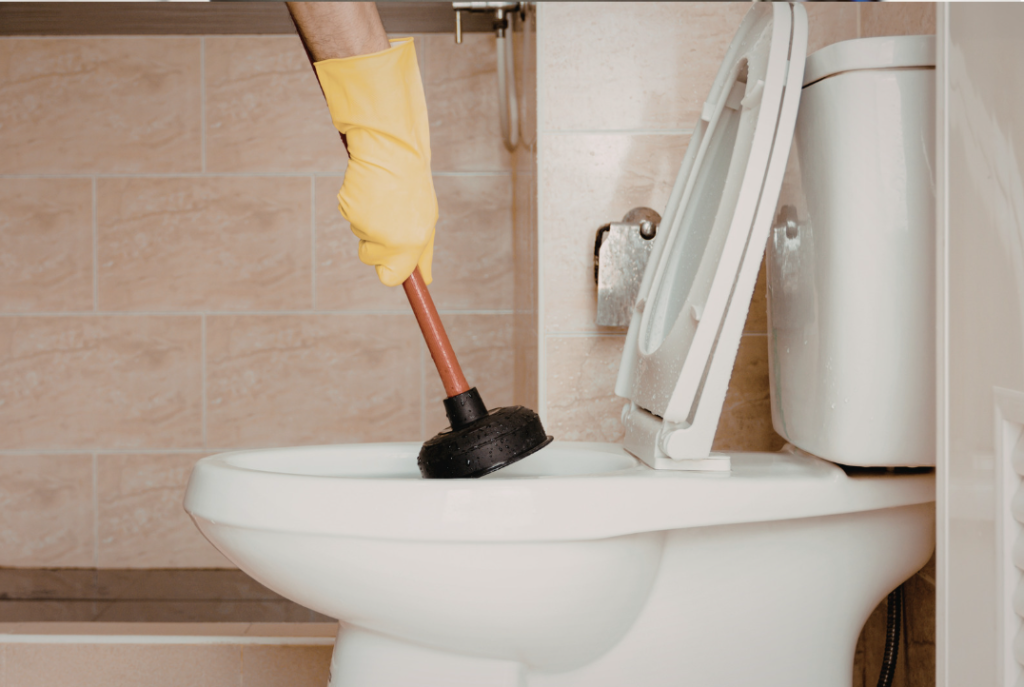
Use the right plunger. You need a flange plunger (also called a toilet plunger) with an extended rubber flange that fits into the drain opening. The flat sink plungers don’t work on toilets.
Ensure adequate water level. You need enough water in the bowl to cover the plunger cup. If the bowl is too empty after you stopped the overflow, slowly add some water from a bucket. If it’s too full, remove some water first.
Create a tight seal. Insert the plunger into the drain hole at the bottom of the bowl and press down firmly to create an airtight seal. This seal is crucial for effective plunging.
Plunge with the right technique. Push down steadily, then pull up sharply without breaking the seal. The pulling motion is actually what dislodges clogs. Repeat this pumping action 15-20 times. Don’t plunge frantically—controlled, forceful movements work better.
Test the drain. Remove the plunger and watch if water drains. If it does, congratulations—you’ve fixed the overflowing toilet. If not, repeat the plunging process. Sometimes stubborn clogs need 3-4 rounds of plunging.
Flush carefully. Once water is draining normally, try a partial flush (hold down the handle for just 1-2 seconds) to test. If that drains fine, do a full flush. Keep your hand ready to stop the flapper if the overflowing toilet problem returns.
Method 2: Using a Toilet Auger (For Stubborn Clogs)
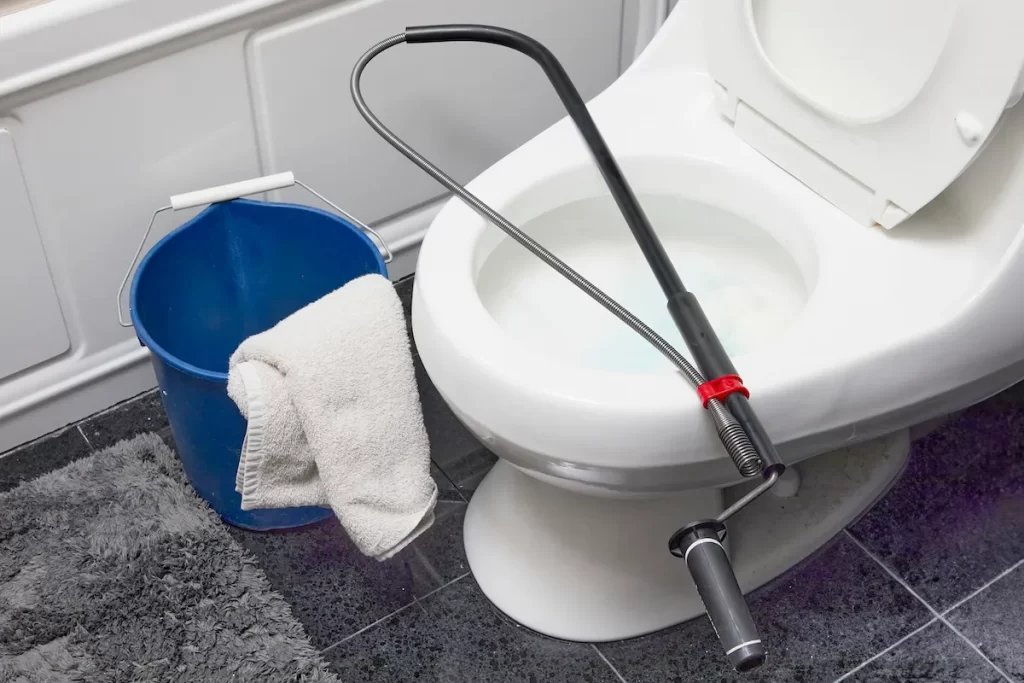
If plunging doesn’t work, you need a closet auger (also called a toilet snake). These cost $15-40 at hardware stores and are essential emergency tools every homeowner should own.
Insert the auger carefully. Place the bent end of the auger into the drain at the bottom of the toilet bowl. The rubber coating protects your porcelain from scratches.
Crank and push. Turn the handle clockwise while gently pushing the cable deeper into the drain. You’ll feel when the auger hits the clog—there will be resistance.
Break up or hook the clog. Keep cranking and pushing to either break through the blockage or hook it so you can pull it out. You might need to work at it for several minutes.
Retrieve the auger slowly. Once you’ve broken through or hooked the clog, slowly pull the auger out while continuing to turn the handle. The clog might come with it.
Test thoroughly. Pour a bucket of water into the bowl to test drainage before flushing. If it drains normally, you’ve successfully fixed the overflowing toilet.
Method 3: Hot Water and Dish Soap (For Organic Clogs)
This gentle method works surprisingly well for clogs caused by excessive toilet paper or waste—not for hard objects.
Add dish soap. Squirt about 1/2 cup of liquid dish soap into the toilet bowl. The soap acts as a lubricant.
Pour hot (not boiling) water. Heat water until it’s very hot but not boiling (boiling water can crack porcelain). Pour it into the bowl from waist height. The height and temperature help break up the clog.
Wait 10-15 minutes. Let the soap and hot water work on the clog. Often, you’ll see the water level start to drop as the clog loosens.
Follow with plunging. After waiting, use your plunger to finish clearing the softened clog.
The Toxic Truth About Overflowing Toilet Water
Let’s be brutally honest: the water from an overflowing toilet isn’t just “dirty”—it’s a health hazard that requires serious precautions.
Category 2 and 3 water contamination is what plumbing professionals call toilet overflow water. Category 2 (gray water) contains bacteria and microorganisms. Category 3 (black water) contains sewage, fecal matter, and dangerous pathogens. Your overflowing toilet produces one or both types depending on what was in it.
Dangerous bacteria and pathogens in toilet overflow water include E. coli, salmonella, hepatitis, norovirus, and other harmful microorganisms. Contact with this water—especially through cuts, mucous membranes, or ingestion—can cause serious illness.
24-48 hour mold growth window starts the moment water touches your floors, walls, or belongings. Mold spores are everywhere, just waiting for moisture. Within two days of an overflowing toilet incident, toxic mold can begin colonizing damp areas, creating additional health risks and requiring expensive remediation.
Proper protective equipment is non-negotiable when cleaning up after an overflowing toilet:
- Rubber gloves (not thin latex—use thick cleaning gloves)
- Safety goggles or glasses to protect from splashes
- Rubber boots if water coverage is extensive
- Face mask to avoid breathing aerosolized bacteria
- Long sleeves and pants you can wash in hot water afterward
Never use regular towels or cleaning cloths that you plan to reuse. Use disposable materials or old towels designated for disposal after cleanup.
How to Properly Clean and Disinfect After an Overflowing Toilet
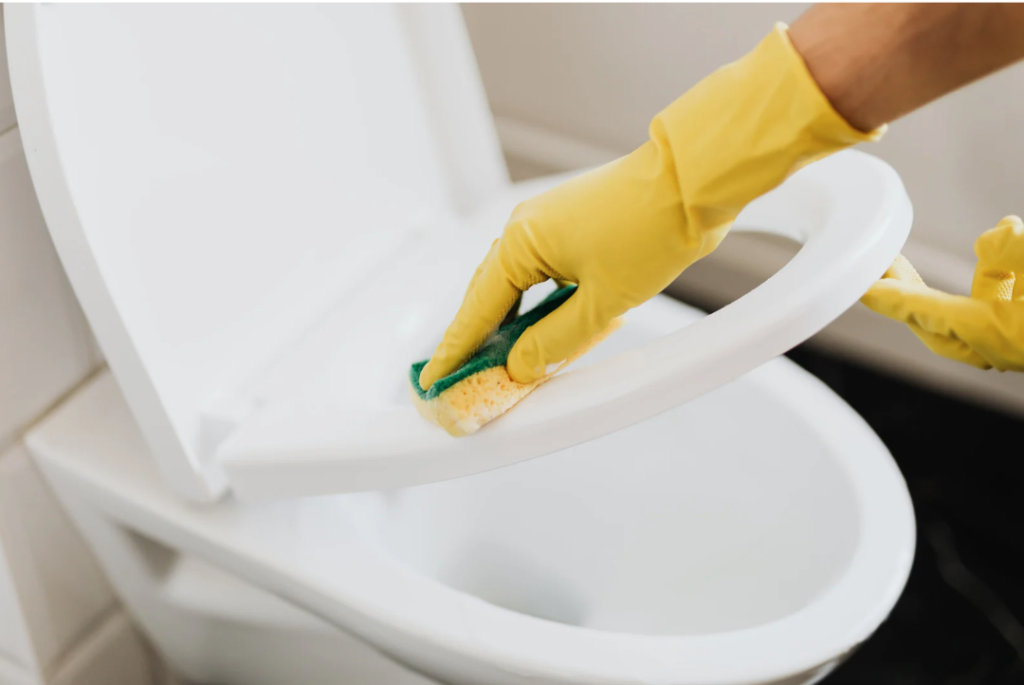
Stopping the overflowing toilet is only half the battle. Proper cleanup prevents illness and long-term damage to your home.
Remove all standing water first. Use a wet/dry vacuum, mop and bucket, or absorbent materials. Get every drop you can see. Water you miss now is mold you’ll fight later.
Prepare your disinfectant solution. Mix one cup of bleach with one gallon of warm water. This ratio kills bacteria and pathogens from the overflowing toilet. For those who can’t use bleach, EPA-registered disinfectants like Benefect or similar antimicrobial products work.
Disinfect every surface the water touched. This includes:
- The entire bathroom floor, paying special attention to grout lines
- Baseboards and the bottom 6 inches of walls
- The toilet exterior
- Any furniture, cabinets, or fixtures that got splashed
- Door frames and thresholds
Let disinfectant sit for 10 minutes. Contact time matters. Don’t just wipe and rinse immediately. The disinfectant needs time to kill pathogens from your overflowing toilet.
Rinse with clean hot water. After the contact time, mop again with clean hot water to remove bleach residue.
Dry everything thoroughly. Use fans, open windows, and dehumidifiers to accelerate drying. Hidden moisture becomes mold problems. Point fans at baseboards and under cabinets where moisture hides.
Dispose of cleaning materials properly. Seal used rags, towels, and disposable materials in plastic bags before throwing them away. Wash mop heads and reusable tools with hot water and bleach.
Sanitize your tools. Don’t forget to disinfect the plunger, auger, bucket, and any other tools that touched the overflowing toilet water.
FAQs
What should I do first if my toilet is overflowing?
Turn off the water supply immediately, then stop the tank from refilling by pressing the flapper and lifting the float. Do not flush again.
Why is my toilet overflowing?
Common causes include clogged drains, main sewer blockages, faulty flappers or fill valves, full septic tanks, and blocked vent pipes.
Can I fix an overflowing toilet myself?
Yes, for minor clogs. Use a flange plunger, toilet auger, or hot water with dish soap. Major issues like main line clogs require a professional plumber.
Is overflowing toilet water dangerous?
Yes. It may contain bacteria and pathogens (E. coli, salmonella, etc.) and can cause mold growth within 24-48 hours. Always wear protective gear.
When should I call a plumber?
Call immediately if multiple drains are backing up, sewage is entering your home, the toilet keeps overflowing, your shut-off valve doesn’t work, or septic issues are suspected.