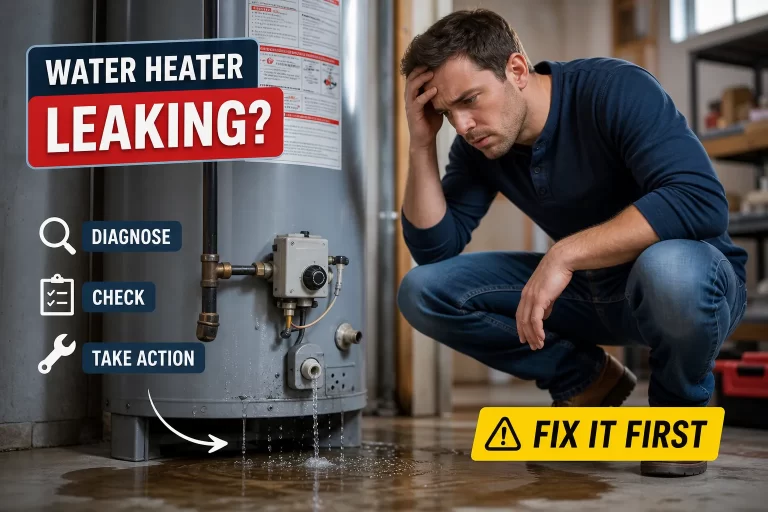
Noise, odor, discolored water, and corrosion are usually connected — most trace back to sediment sitting in the tank or an anode rod that’s reached the end of its life. Here’s how to tell which one you’re dealing with and what to do about it.
Strange Noises
What Causes Popping, Rumbling, or Banging Noises?
Sediment buildup at the bottom of the tank is by far the most common cause — trapped water boils underneath the sediment layer and creates the popping or rumbling sound. Flushing the tank is the standard fix. A loose or damaged valve or pipe fitting can also cause banging or vibrating noises, and high water pressure can make the whole system louder than normal during operation.
What Causes a High-Pitched Whining Sound?
Check whether the sound is coming from the heating element or the pressure relief valve. A whining heating element usually needs replacing. If it’s the pressure relief valve, that can indicate excess pressure buildup in the tank and is worth a professional inspection rather than something to ignore.
Why Is My Water Heater Noisy During Heating Cycles?
Noise specifically during heating — sometimes described as expansion or contraction sounds — is worth a full inspection rather than assuming it’s harmless. It often overlaps with the same sediment and pressure issues covered above, but persistent noise during every cycle is a good reason to have a plumber take a closer look before something fails.
When Should I Just Call Someone About the Noise?
If flushing the tank and checking for loose fittings doesn’t quiet things down, or if the noise is new, sudden, and unusually loud, that’s the point to stop troubleshooting yourself and call a professional. Noise is often the earliest warning sign of a bigger issue, which is exactly why it’s worth taking seriously early.
Foul Odor From Hot Water
What’s Causing the Smell?
A deteriorated anode rod is the most common cause of an unpleasant smell — once it corrodes past a certain point, it stops protecting the tank and can produce odor. Bacteria growing in stagnant water is the other leading cause, especially in a tank that hasn’t been used or flushed in a while.
How Do I Fix It?
If the anode rod is corroded, replacing it typically resolves the smell. If bacteria is the cause, disinfecting and thoroughly flushing the tank usually clears it up. Turn off the power and water supply before draining, and consider a water heater cleaning solution if the odor persists after flushing. If neither step resolves it, a professional can identify what’s actually causing the smell.
Discolored, Rusty, or Metallic-Tasting Water
Why Is My Hot Water Rusty or Discolored?
First check whether the discoloration affects only hot water or both hot and cold. If it’s only the hot water, the water heater itself is the likely source — sediment buildup or a corroded anode rod are the two most common causes, and flushing the tank or replacing the rod usually solves it. If both hot and cold water are discolored, the issue is more likely in your home’s pipes rather than the water heater, and needs a broader plumbing inspection.
Why Does My Water Taste Metallic?
A corroded anode rod is the most common explanation, though high mineral content (iron or manganese) in your water supply can cause the same effect. An aging or deteriorating tank can also release metal particles into the water. Flushing the tank is worth trying first; if the taste persists, the anode rod or the tank itself likely needs attention.
Preventing Sediment Buildup
Regularly flushing the tank — attaching a hose to the drain valve and running water until it comes out clear — is the single most effective way to prevent sediment problems before they start. A sediment filter on the cold water supply line adds another layer of protection by catching particles before they ever reach the tank. Beyond that, sediment buildup directly reduces heating efficiency, since it insulates the heating element from the water it’s supposed to heat — which means it’s not just a noise and odor issue, it’s also costing you on your energy bill.
Tank Corrosion & Lifespan
How Does Corrosion Actually Damage the Tank?
Corrosion inside the tank leads to rust, and over time that rust can progress into cracks and leaks. Once corrosion has caused actual tank damage, replacement is generally the only real fix — there’s no repair that restores a corroded tank wall.
Why Is Rapid Corrosion Dangerous?
Corrosion that’s progressing faster than expected shortens the water heater’s remaining lifespan and can lead to sudden failure rather than a gradual decline. Identifying the cause — usually water quality or a failing anode rod — and addressing it early is the only way to slow it down.
Does Water Quality Affect How Long My Water Heater Lasts?
Yes, significantly. Poor water quality, particularly high mineral content, accelerates tank corrosion and shortens the unit’s lifespan. Installing a water softener or choosing a corrosion-resistant tank on your next unit are both effective ways to extend how long a water heater lasts in hard-water areas.
Why Is My Water Heater’s Lifespan Shorter Than Expected?
Sediment accumulation is one of the biggest contributors — it accelerates corrosion from the inside and shortens the system’s operational life. Regularly flushing the tank to keep sediment under control is the most effective way to get the full expected lifespan out of your unit and avoid premature replacement costs.
Get to the Bottom of It
Noise, odor, and discoloration are your water heater telling you something is wrong before it becomes an emergency. Our licensed plumbers can quickly determine whether you’re looking at a simple flush or something more serious.
Contact The 5 Star Plumbing today for Rheem water heater service across Los Angeles and San Francisco.