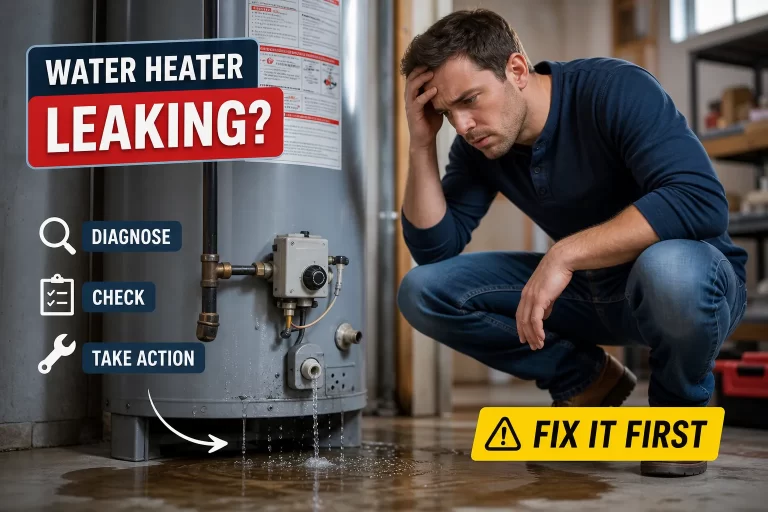
A leaking Rheem water heater is never something to wait out — even a small leak points to a real problem, and left alone it can mean water damage, higher utility bills, or a full tank failure. Here’s how to figure out where the leak is coming from and what to do about it.
What’s Causing My Rheem Water Heater to Leak?
Most Rheem leaks trace back to one of a handful of causes: a faulty temperature and pressure relief (T&P) valve, a loose or damaged drain valve, corrosion inside the tank itself, or a loose connection at the inlet or outlet pipes. Where the water is actually coming from — top, bottom, or a specific fitting — is the fastest way to narrow down which of these it is.
Leaking From the Top of the Tank
Leaks from the top of a Rheem water heater are most often the T&P relief valve, which releases excess pressure and temperature to protect the tank. A leaking T&P valve usually means it’s malfunctioning or was installed incorrectly, and the fix is to replace it — not just tighten it. Loose or damaged inlet and outlet pipe connections are the other common source of top leaks, and those typically just need tightening or a new fitting.
Leaking From the Bottom of the Tank
Bottom leaks are more often a sign of a bigger problem. A damaged or deteriorated heating element or thermostat housing gasket can let water seep out near the base of the tank — if that’s the source, the component usually needs to be replaced rather than resealed. Corrosion or a crack in the tank itself is the more serious possibility, and if that’s confirmed, the tank isn’t repairable and needs replacing. A faulty drain valve (see below) is the other common bottom-leak source, and it’s the easiest of the three to fix.
Pressure Relief Valve (T&P Valve) Problems
The T&P valve is the single most common source of Rheem water heater leaks, and it shows up a few different ways:
The Valve Drips or Leaks Continuously
Turn off the power and water supply first, then inspect the valve for visible damage or debris. If it looks worn or damaged, it needs to be replaced. If it looks fine, the leak may actually be caused by excessive pressure in the tank rather than the valve itself — in that case, the temperature and pressure settings need to be adjusted.
The Valve Releases Water Frequently
A valve that keeps discharging water is usually responding to real excess pressure inside the tank, not malfunctioning on its own. Checking and adjusting the water pressure to the recommended level is the right first step — ignoring this creates a real safety hazard.
The Valve Is Visibly Faulty
A relief valve that’s clearly malfunctioning should be replaced immediately rather than monitored. Because this valve exists specifically to prevent dangerous pressure buildup (including the small risk of a tank rupture), we strongly recommend having a licensed plumber handle the replacement rather than attempting it yourself.
Drain Valve Leaks
The drain valve sits at the bottom of the tank and is used for flushing sediment. A leak here is usually a loose connection or a valve with visible wear or damage — tightening it or replacing the valve resolves most cases. But a leaky drain valve can also be a symptom of sediment buildup or high water pressure putting extra strain on the fitting, so if it happens again after a fix, it’s worth checking those underlying causes too.
Low Water Pressure
If your Rheem water heater is delivering low hot water pressure rather than leaking, start with the basics: confirm the shut-off valve is fully open, since a partially closed valve restricts flow on its own. From there, check for sediment buildup in the tank or pipes, a clogged water filter, or a faulty pressure regulator — any of these can quietly choke off pressure over time. If you’ve checked all of these and pressure is still low, a professional inspection is the next step.
Do Installation or Maintenance Mistakes Cause Leaks?
Yes — improper installation and skipped maintenance are common root causes that show up as leaks months or years later. Loose connections, inadequate sealing during the original installation, or never flushing the tank all gradually contribute to leaks. This is one of the best arguments for professional installation and a regular flushing schedule rather than a DIY setup you never revisit.
Signs of a Leak in an Electric Rheem Water Heater
Electric units leak from the same general spots — the tank, the heating element housing, and the connections — so a regular visual check of the tank and its fittings is the best early-warning system. Catching a small drip before it becomes a steady leak is the difference between a quick fix and a full tank replacement.
How Much Does It Cost to Fix a Leaking Rheem Water Heater?
A T&P valve or drain valve replacement typically runs $150–$300. A heating element or gasket replacement usually falls in the $200–$400 range. If the leak turns out to be tank corrosion or a crack, the tank itself can’t be repaired, and water heater replacement is the only real option.
Don’t Wait on a Leaking Water Heater
A leak that seems minor today is rarely minor for long. Our licensed plumbers can pinpoint the exact source of a Rheem leak and tell you honestly whether it’s a quick repair or time to talk replacement.
Contact The 5 Star Plumbing today for fast, reliable Rheem water heater repair across Los Angeles and San Francisco.