
You wake up, head to the kitchen, and notice the water is just sitting there — not going anywhere. A clogged kitchen sink is one of the most common plumbing problems homeowners face, and the good news is you do not need to call a plumber to fix it. In most cases, you can unclog your kitchen sink drain yourself in under 30 minutes using simple tools you already have at home.
In this guide, we will walk you through 4 proven DIY methods to unclog your kitchen sink drain — starting with the easiest and working up to the most thorough. Try them in order and you will have that drain flowing freely again in no time.
What You Might Need (Tools & Materials)
- Hot water
- Baking soda (1 cup)
- White vinegar (2 cups)
- Drain snake (or metal coat hanger / old electrical cord)
- Bucket
- Wrench or plumber’s wrench
- Plumber’s tape
4 Methods to Unclog Your Kitchen Sink Drain
Method 1: Run Hot Water Down the Drain
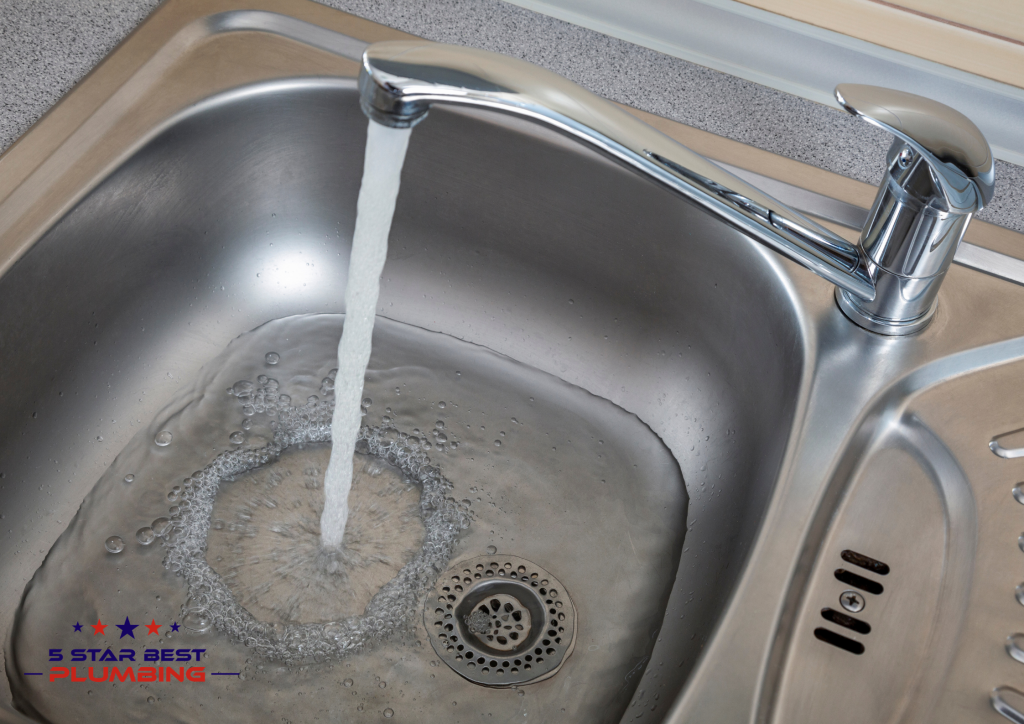
This is always the first thing to try — it is free, takes 60 seconds, and works surprisingly often. Simply run hot water down your kitchen sink for a few minutes. The heat helps melt or loosen grease buildup and softens any solid debris sitting in the pipe, allowing it to make its way down to the sewer line on its own.
Best for: Light grease clogs or partial blockages.
Pro Tip: Use the hottest water possible straight from the tap. Do not use boiling water if you have PVC pipes as it can damage them.
Method 2: Baking Soda and Vinegar
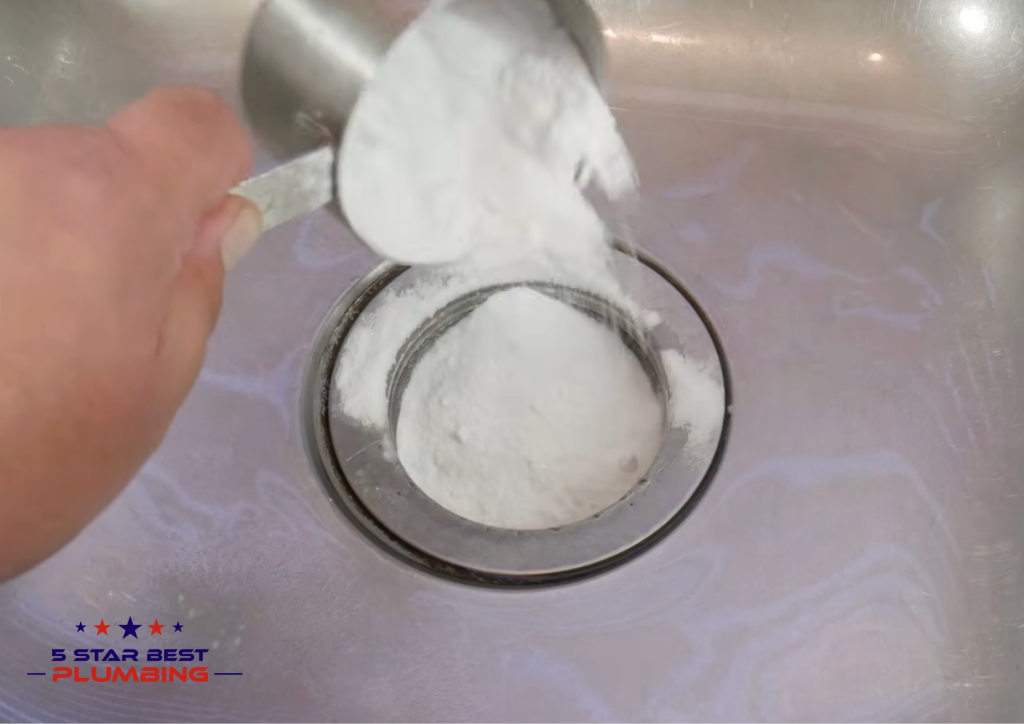
If hot water alone does not do the trick, the classic baking soda and vinegar combination is your next move. This creates a chemical reaction that breaks down grease, soap scum, and organic buildup inside the pipe — without any harsh chemicals.
Here is how to do it:
- Pour 1 cup of baking soda directly into the drain.
- Pour the first cup of vinegar slowly and let it fizz and work for a few minutes.
- Pour the second cup of vinegar for a second round of reaction — this gives the clog a second punch.
- Finish by flushing the drain with hot water to clear out the loosened debris.
Best for: Grease, soap scum, and organic buildup.
Pro Tip: Do not mix baking soda and vinegar ahead of time — pour them into the drain separately so the reaction happens inside the pipe where the clog is.
Method 3: Drain Snake or Wire Hanger (The Poke Method)
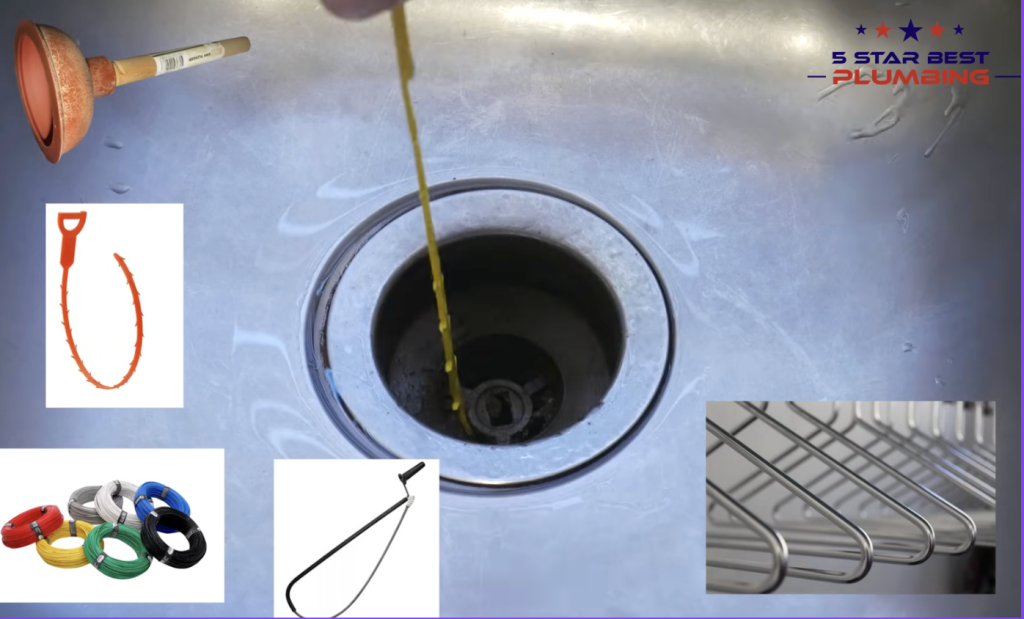
If the chemical approach did not fully clear the clog, it is time to get physical. A drain snake is a flexible wire tool you insert into the drain to physically break up or pull out whatever is causing the blockage. You can buy one at a dollar store or hardware store, but you can also use a metal coat hanger or any old electrical cord that is thin enough to fit through the drain.
Here is how to do it:
- Insert the snake, hanger, or cord into the drain opening.
- Move it around to break up the clog or hook onto debris and pull it out.
- Once you pull out the debris, discard it in the trash — do not wash it back down the drain.
- Run hot water to flush out any remaining loose material.
Best for: Hair, food debris, or solid material stuck in the upper part of the drain.
Pro Tip: If you find something unexpected in the drain — like a small toy — remove it and throw it away. Do not push it further down the pipe.
Method 4: Remove and Clean the P-Trap
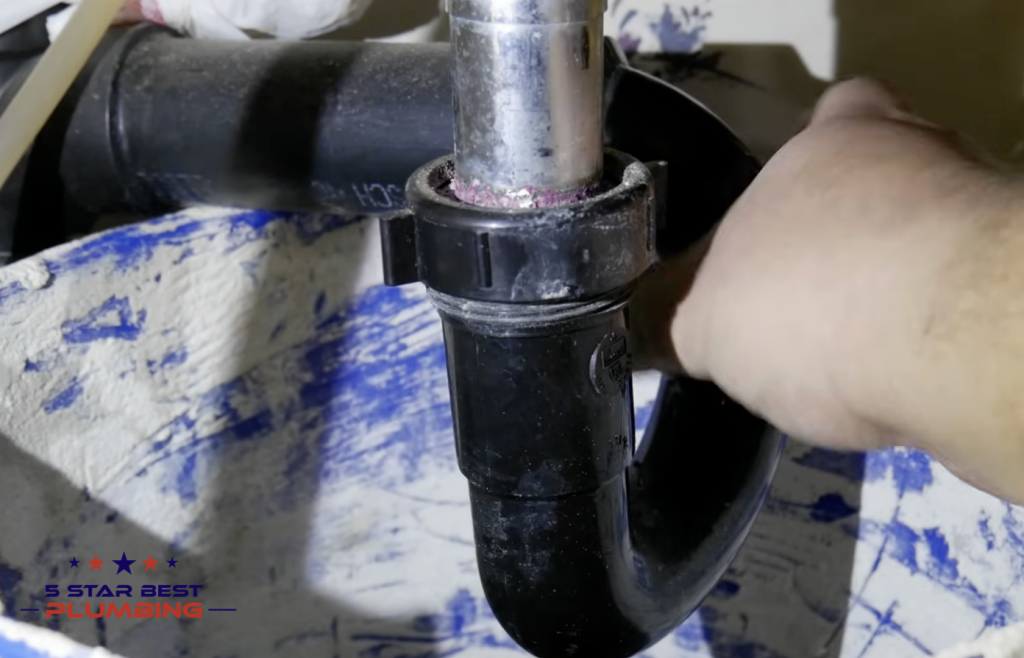
If none of the above methods worked, the clog is likely sitting deeper in the pipe — most commonly in the P-trap, which is the curved pipe section directly under your sink. This method requires a little more effort but is still very doable as a DIY job.
Here is how to do it:
- Turn off the water supply to the sink.
- Place a bucket under the P-trap to catch any water and debris.
- Loosen the slip nuts on both ends of the P-trap by hand or with a wrench. Usually hand-tight is enough to loosen them.
- Remove the P-trap and clean out any blockage you find inside it.
- Use a drain snake or wire hanger to probe further up or down the pipe opening if needed.
- Reattach the P-trap and wrap the connections with plumber’s tape for a secure, leak-free seal.
- Turn the water back on and test the drain.
Best for: Stubborn clogs deep in the pipe that other methods could not reach.
Pro Tip: Always use plumber’s tape when reassembling the P-trap — it prevents leaks and goes a long way in keeping your pipes sealed properly.
When Should You Call a Plumber?
These 4 methods will solve the majority of kitchen sink clogs. However, it is time to call a licensed plumber if:
- All 4 methods have failed and the drain is still completely blocked.
- Multiple drains in your home are clogged at the same time — this could indicate a main sewer line blockage.
- You notice foul smells coming from multiple drains.
- There is water backing up into other fixtures like the toilet or bathtub.
- You see signs of pipe damage or leaking under the sink.
FAQs
Can I use chemical drain cleaners instead?
You can, but it is not recommended as a first option. Chemical drain cleaners like Drano contain harsh ingredients that can damage older pipes over time and are harmful to the environment. The baking soda and vinegar method is safer and often just as effective.
How do I prevent my kitchen sink from clogging in the future?
Avoid pouring grease or oil down the drain — let it cool and dispose of it in the trash. Use a drain strainer to catch food particles, and run hot water down the drain for 30 seconds after every use to keep buildup from forming.
How often should I clean my kitchen drain?
A good rule of thumb is to do a baking soda and vinegar flush once a month as preventative maintenance. This keeps grease and soap scum from building up before they become a real clog.
What is a P-trap and why does it clog?
The P-trap is the curved pipe section under your sink that holds a small amount of water at all times to block sewer gases from coming up into your home. Because of its curved shape, it is a common spot for grease, food debris, and soap scum to collect and cause blockages.
Is it safe to remove the P-trap myself?
Yes, for most homeowners this is a safe and manageable DIY task. Just make sure the water is off, have a bucket ready, and use plumber’s tape when reassembling. If you are uncomfortable at any point, it is perfectly fine to call a plumber.