Handheld showers are a bathroom essential — but sooner or later, most of them develop the same frustrating problem: a leaking handheld shower hose, usually right at the hose connection. The good news? You don’t need to call a plumber or buy a brand-new shower head. In most cases, you can stop the drip in under fifteen minutes with tools you already have at home.
Whether the leak is at the front or the back of the hose, this guide walks you through the entire repair — step by step, no special skills required.
Table of Contents
Where Is the Leak Coming From?
The most common location for a leaking handheld shower hose is the connection point between the shower head and the hose, often called the swivel joint. Before you grab any tools, try this first: grip the shaft and turn it clockwise. Sometimes the collar simply loosens over time, and hand-tightening is all it takes.
If that stops the drip, you’re done. If not, keep reading — the shower hose repair is still simple.
Step-by-Step: How to Fix a Leaking Handheld Shower Hose
Step 1: Remove the Collar
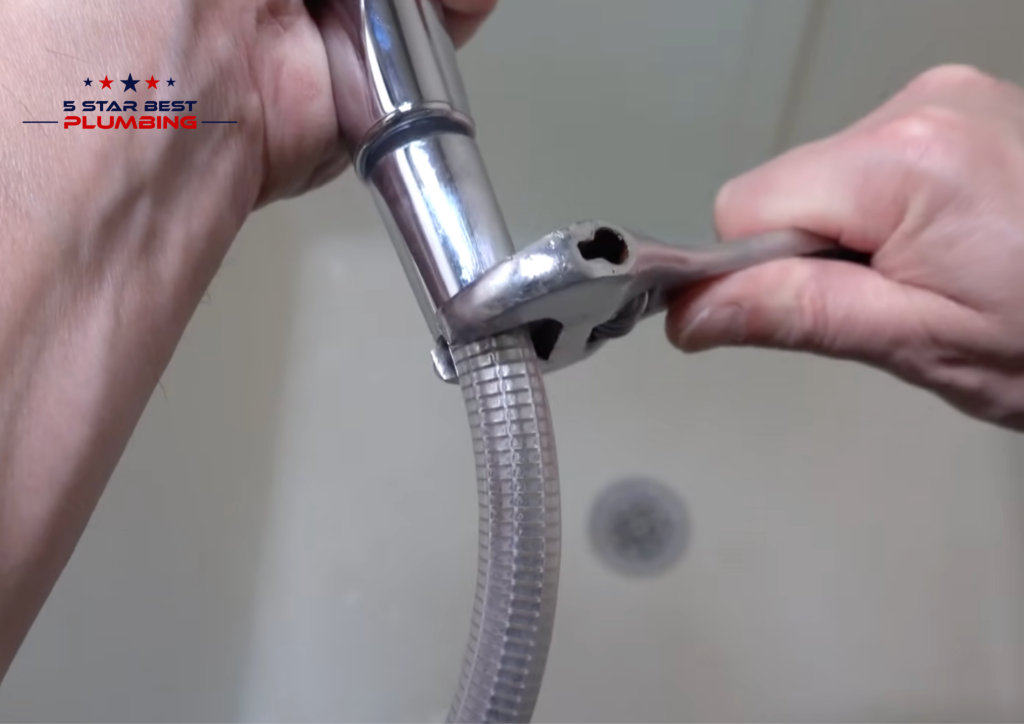
Unscrew the collar that connects the hose to the shower head. It’s often on very tight, so doing this by hand can be a struggle.
Important: don’t use pliers or tools with sharp teeth — they’ll chew up and tear the collar.
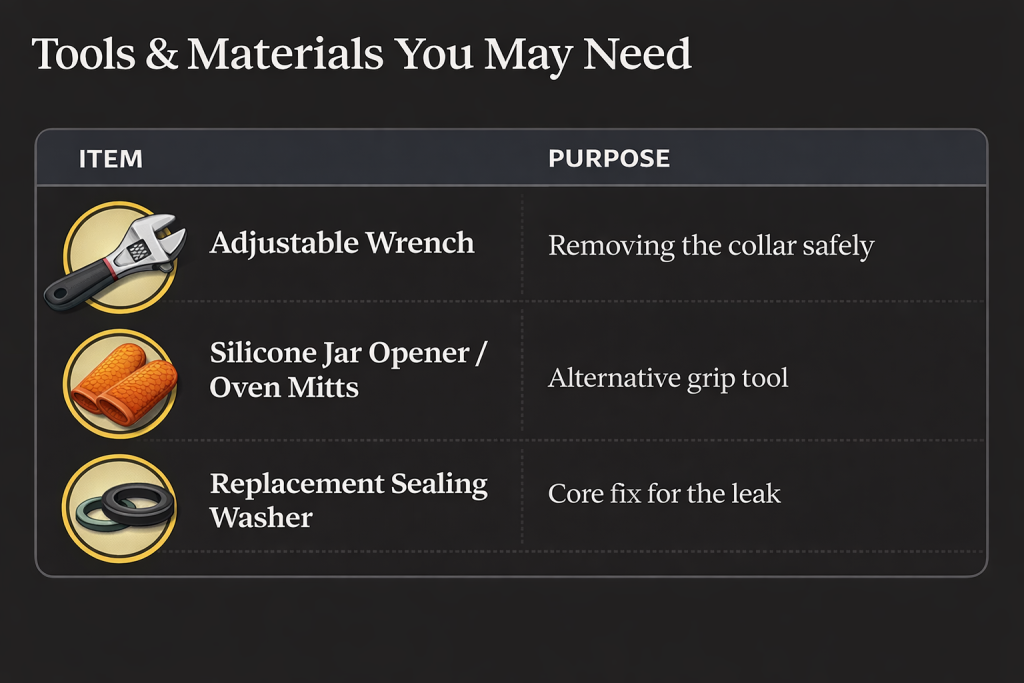
The right way: look for the two flat spots built into the collar. They’re designed for an adjustable wrench, whose flat jaws grip firmly without damaging the finish.
Step 2: Inspect the Sealing Washer
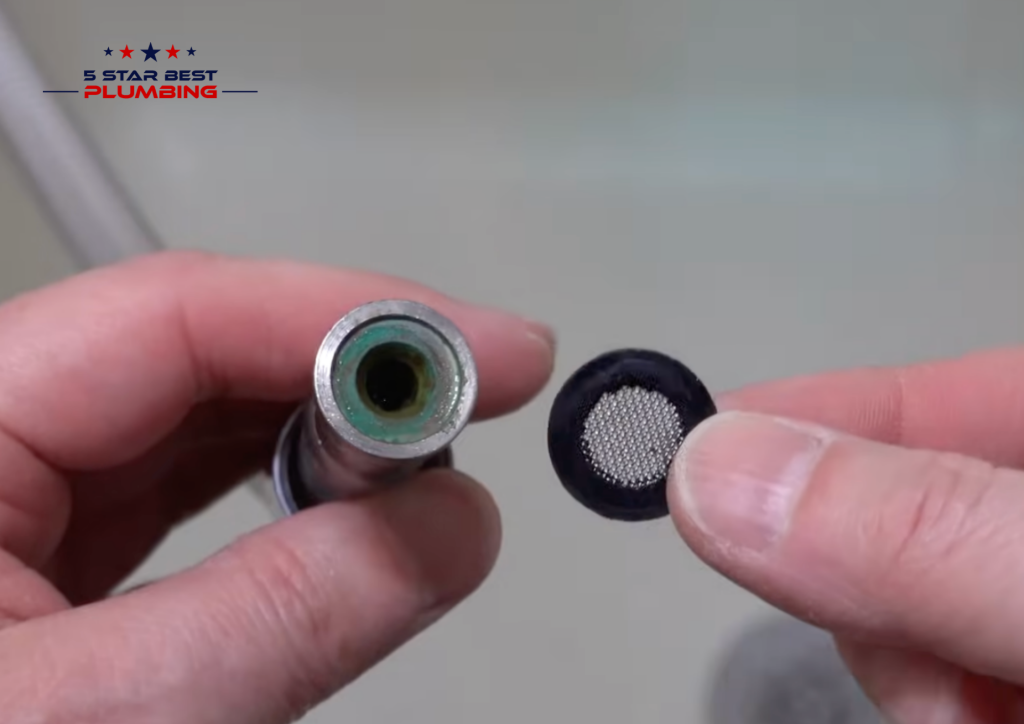
Once the collar is off, look inside. You’ll find a small black rubber ring — the sealing washer. This tiny component keeps the connection watertight, and it’s almost always the culprit behind a leaking handheld shower hose. To remove it, slide the collar down the hose and the washer will pop out on its own.
Step 3: Fix or Replace the Washer
You have two options here:
Option 1 — flip it over (an old plumber’s trick). Simply flip the washer over before reinserting it. The underside offers a fresh sealing surface and can stop the leak without buying anything new. Try this first.
Option 2 — replace it. If flipping doesn’t help, take the old washer to your local hardware store and have them match a new one by size. Replacement washers typically cost under a dollar.
Fixing small drips like this also helps meet the goals of the EPA’s WaterSense Fix a Leak program, which estimates household leaks waste over 1 trillion gallons of water nationwide each year.
Step 4: Check the Hose End
While everything is apart, inspect the end of the hose for cracks or chips. Minor wear is normal, but significant damage means it’s time to replace the hose — or, if the fittings are corroded too, the entire handheld unit.
Step 5: Reseat the Washer
Work the washer back into the end of the hose. It can be a tight fit, so ease it around the threads carefully until it sits completely flush.
Step 6: Screw the Collar Back On
Thread the collar back onto the shower head by hand. Here’s what not to do:
- Don’t use Teflon tape
- Don’t use sealing paste
- Don’t tighten with a wrench — over-tightening can crack the shower head
The washer alone creates the watertight seal, so hand-tight is enough. A silicone jar opener adds extra grip if your collar has no flat spots.
Step 7: Test for Leaks
Turn the water back on and check every connection point. Done correctly, the repair should leave you with zero drips. If the leak persists, replace the washer with a fresh one — that solves the problem permanently in the vast majority of cases.
Why Do Handheld Shower Hoses Leak?
Understanding the cause helps you stop the problem from coming back. The most common reasons behind a leaking handheld shower hose include:
- A worn sealing washer — rubber hardens and compresses with age, losing its grip.
- Mineral buildup — hard-water deposits on the threads and washer prevent a tight seal.
- A cracked or kinked hose — flexible hoses fatigue after years of bending.
- Over-tightening — cracked collars and crushed washers usually trace back to wrench-tightened connections.
- Excessive water pressure — pressure above 80 psi strains every joint in your bathroom. If you’ve noticed water pressure problems elsewhere in the house, have your pressure regulator checked too.
How to Prevent Shower Hose Leaks
A few small habits will keep the connection watertight for years:
- Replace the sealing washer once a year — it costs pennies and takes two minutes.
- Descale the shower head and hose fittings every few months by soaking them in white vinegar.
- Never over-tighten the collar; hand-tight is the correct torque.
- Avoid yanking or stretching the hose past its natural length.
- When it’s time for an upgrade, consider a WaterSense-labeled shower head — they’re independently tested for performance and efficiency.
When to Call a Professional Plumber
A leaking handheld shower hose is a classic DIY fix, but some symptoms point to bigger problems: leaks that return within weeks, dripping from inside the wall, corroded shower valves, or water stains around the tub. That’s when it’s worth bringing in a licensed plumber.
The 5 Star Plumbing handles leaking faucet and fixture repair with fast diagnosis, upfront pricing, and the job done right the first time. And if your shower has other quirks — like no cold water coming through — we’ve covered that too.
Conclusion
A leaking handheld shower hose is one of the easiest bathroom repairs you can do yourself. In most cases a worn sealing washer is all that stands between you and a drip-free shower — and a replacement costs less than a dollar. Try the flip trick first; if that doesn’t do it, fit a new washer. Either way, you’ll be done in minutes, no plumber required.
FAQs
Why is my handheld shower leaking at the hose connection?
The most common cause is a worn or misaligned sealing washer inside the collar. Over time, the rubber degrades and loses its ability to create a watertight seal.
Do I need Teflon tape to fix a shower hose leak?
No. The sealing washer is the only thing creating the seal at this connection. Adding Teflon tape or plumber’s paste is unnecessary and won’t improve the repair.
Can I fix a leaking shower hose without any tools?
In many cases, yes. If the collar is slightly loose, hand-tightening it may stop the leak immediately. If you need to remove the collar, a silicone jar opener or oven mitts can work as a tool-free alternative to a wrench.
How do I know what size replacement washer to buy?
Remove the old washer and bring it with you to the hardware store. Staff at Home Depot or Lowe’s can match it by size on the spot.