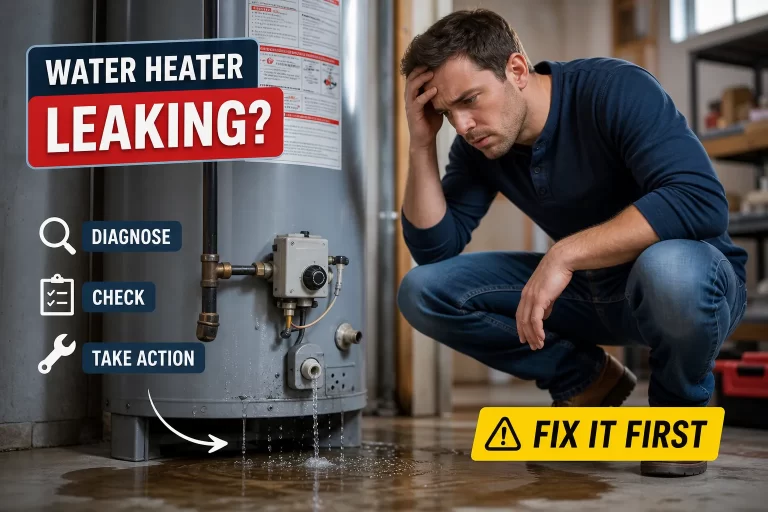
Summer arrives fast — and so do plumbing emergencies. Before the heat peaks and your home’s water systems are running at full capacity, take one afternoon to run through these 9 checks. A little prevention now can save thousands in repairs later.
In This Article
Why you need a plumbing check before summer
Spring is the ideal time to inspect your plumbing. Winter stress, sediment buildup, and months of low-use can leave pipes, valves, and hoses on the edge of failure — and summer’s increased demand is often what pushes them over. Water damage and freezing account for roughly 1 in every 67 insured homes filing a claim each year, with an average claim of over $15,000, according to the Insurance Information Institute. Most of these failures show warning signs weeks or months before they cause real damage.
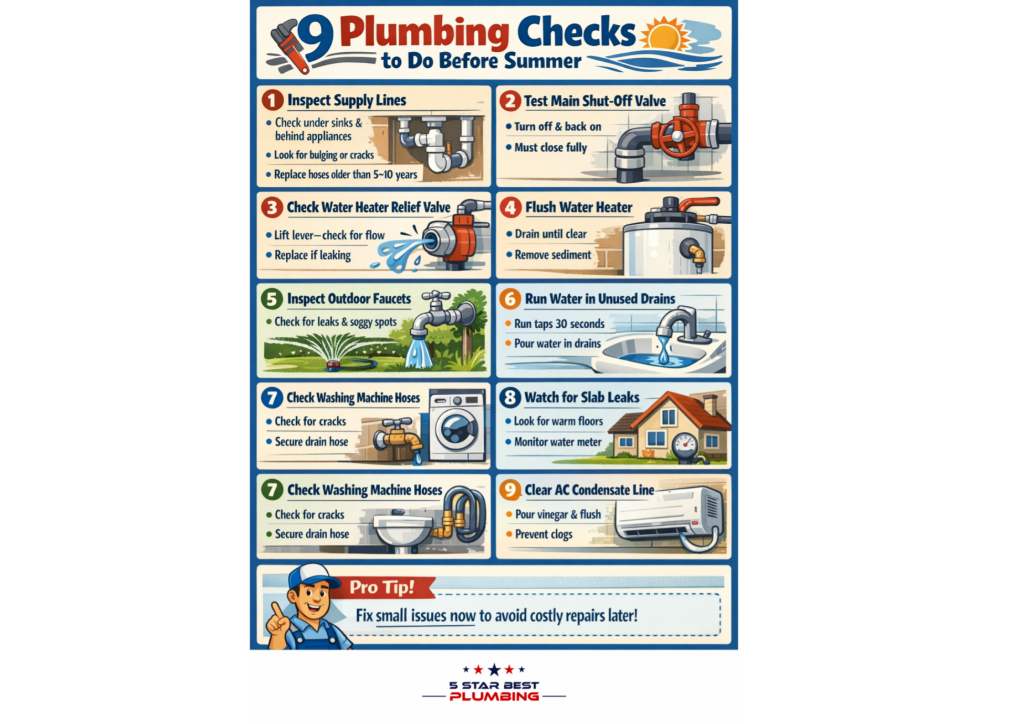
9 plumbing checks to do before summer
1. Inspect supply lines under sinks and behind appliances
Open every under-sink cabinet and pull your washing machine and dishwasher slightly forward. Check all braided supply hoses for bulging, cracking, corrosion at the fittings, or moisture on the floor beneath them. These hoses have a lifespan of 5–10 years and fail without warning. Replace any that look worn before summer use increases the pressure on them.
2. Test your main water shut-off valve
This is the most important check on the list. Find your main shut-off valve — usually near the meter or where the supply line enters the house — and turn it fully off, then back on. If it sticks, corrodes, or will not close completely, have it replaced immediately. In any plumbing emergency, this valve needs to work on the first try.
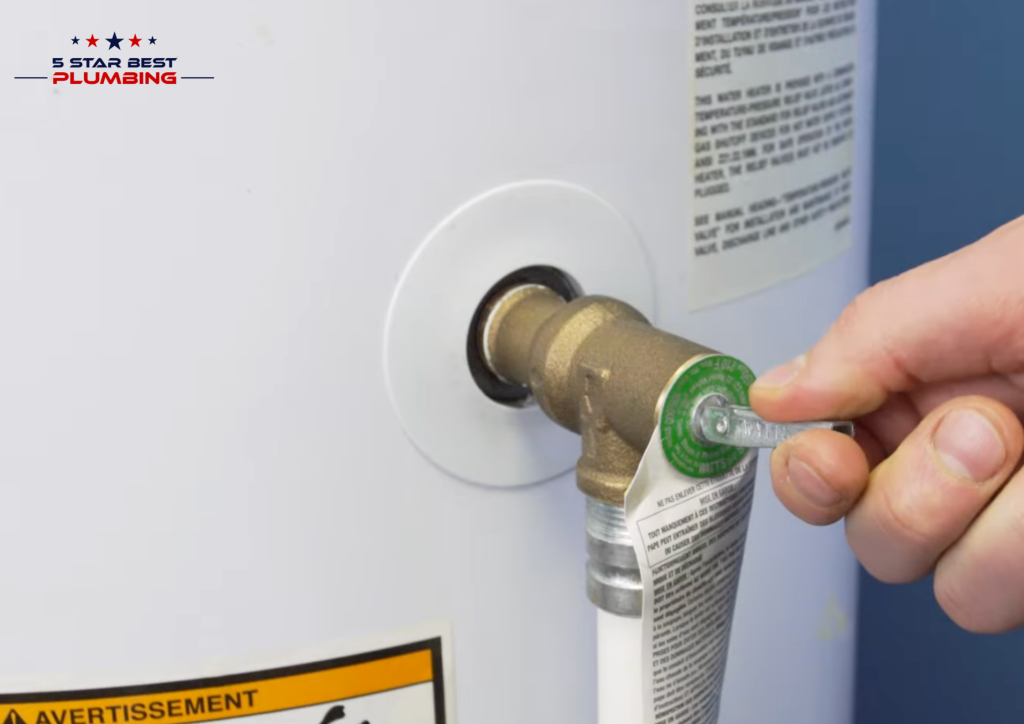
3. Test the water heater pressure relief valve
Briefly lift the T&P valve lever and release it. A quick burst of water should discharge and stop cleanly. If there is no release, or if it drips continuously after you let go, the valve is faulty and needs replacing. This takes 30 seconds and guards against a dangerous tank overpressure situation.
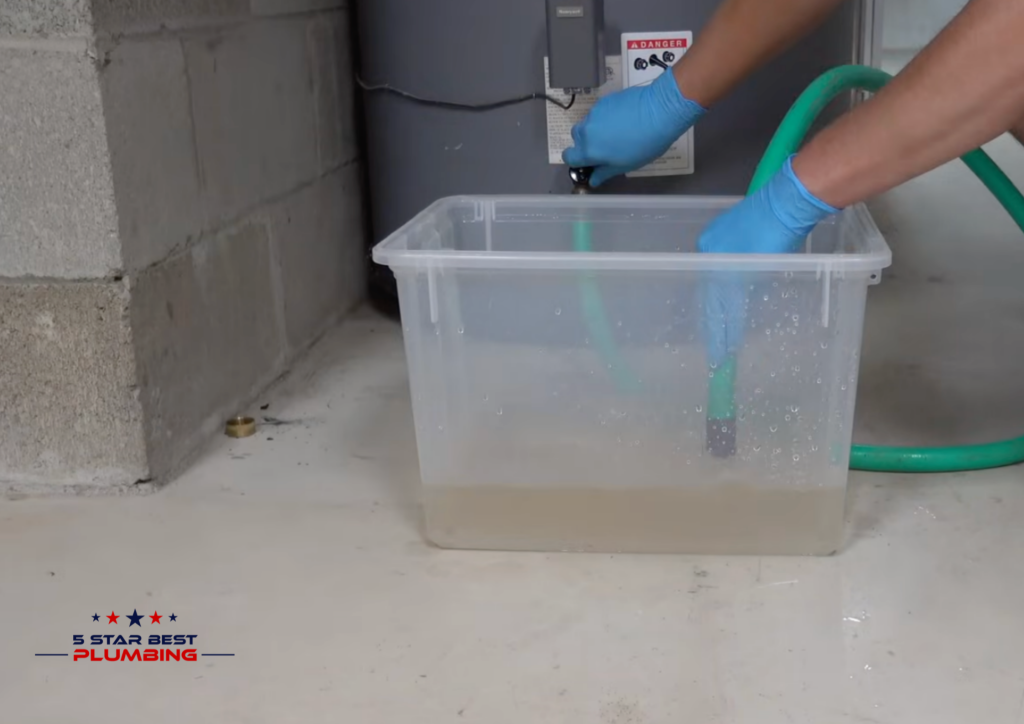
4. Flush the water heater to remove sediment
Mineral sediment collects at the bottom of your tank every year, reducing efficiency and accelerating corrosion. Connect a garden hose to the drain valve, route it to a floor drain or outside, and flush until the water runs completely clear. The U.S. Department of Energy recommends doing this at least once a year to keep your water heater running efficiently. If yours is overdue, this is a good time — and if it’s struggling despite regular flushing, our water heater repair team can take a look.
5. Check outdoor hose bibs and irrigation systems
Inspect every outdoor faucet for drips at the spigot and leaks where the bib meets the exterior wall. Soft spots, bubbling paint, or staining on the wall surface behind it signal water is getting inside. If you have an irrigation system, run each zone and check for pooling water, sunken wet patches, or noticeably green areas between scheduled watering cycles.
6. Run water through every unused drain
Any drain that goes unused for several weeks — guest bathroom sinks, floor drains, utility room sinks — can dry out its P-trap seal and allow sewer gas into your home. Before summer guests arrive, run every tap for 30 seconds and pour a cup of water into every floor drain to restore the barrier.
7. Inspect washing machine hoses and connections
A burst washing machine hose is one of the most common causes of severe indoor flooding, capable of releasing more than 500 gallons per hour. Check both the hot and cold hoses for any signs of cracking, stiffness, or corrosion at the threaded ends. Confirm the drain hose is properly secured in the standpipe so it cannot be pulled free during a spin cycle.
8. Look for early signs of a slab leak
Walk through your home in the morning and pay attention to any warm or damp spots on tile or hardwood floors. Listen for running water when every fixture is off. Check your water meter, avoid using water for 30 minutes, then check it again — any movement points to an active leak. Slab leaks worsen quickly and cause serious structural damage; call a licensed plumber the day you suspect one.
9. Clear your AC condensate drain line
Your air conditioner pulls humidity from the air and drains it through a condensate line. Before cooling season begins, pour ¼ cup of white distilled vinegar into the drain access port near your indoor air handler, wait 30 minutes, then flush with clean water. This clears algae and mold before they form a blockage. A clogged condensate line overflows into your ceiling or attic — one of the most common and preventable causes of summer water damage.
Signs you should call a plumber right now
Some discoveries during your pre-summer check should not wait. Contact a licensed plumber the same day if you find any of the following:A main shut-off valve that sticks or will not fully closeWarm or damp spots on floors with no clear explanationCeiling stains appearing below bathrooms or near the water heaterSupply lines showing visible corrosion, bulging, or stiffnessA T&P valve that leaks or fails to release during testingThese are not issues to monitor and revisit later. Each one is a warning sign of a failure that is already in progress. Contact The 5 Star Plumbing to get it checked before it becomes a bigger repair.
FAQs
How long does a pre-summer plumbing inspection take?
Most homeowners can complete all nine checks in one to two hours. The AC condensate drain flush and water heater sediment flush add another 30 to 45 minutes but are well worth the time.
How do I know if a supply hose needs replacing?
If the hose is more than seven years old, shows any discoloration, feels brittle or stiff, or has white mineral deposits near the fittings, replace it. Braided stainless lines are inexpensive and take minutes to swap out. The cost of a new hose is nothing compared to the cost of a flooded room.
Is it dangerous if I smell sewer gas from a dry drain?
Yes. At low concentrations sewer gas is unpleasant but not immediately harmful. At higher concentrations, hydrogen sulfide causes headaches, nausea, and dizziness, and methane is flammable. If the smell is very strong or you feel unwell, ventilate the area immediately and call a plumber. Do not ignore a strong sewer gas smell in your home.
What causes most summer water damage in homes?
The most common culprits are supply line failures under sinks and behind appliances, overflowing AC condensate drain pans, and slow slab leaks that go undetected for weeks. All three are addressed directly in the checklist above.