
Once you start seeing that your sink in the kitchen is draining slowly, or if you hear a loud bubbling sound from your toilet, it can be a sign that tree roots in your sewer line have caused damage. A careful root invasion will only irritate you, but if it’s disregarded, the issue could get even worse.
Misconception about the Root Invasion in Sewer Lines
Many people have the impression that roots can break or rupture sewer pipes. This is wrong. The main reason you would have roots in your system is a crack or hole in a pipe. Tree roots are attracted to water and oxygen. So in the event that a root detects some moisture, it leans towards it. According to N.C. Cooperative Extension, tree roots can spread two to three times as wide as the tree is tall — which is exactly why a tree planted well away from your yard can still reach an old sewer line. Root systems are composed of several parts including bigger, old roots that support the trees or plants and hair roots that look for and provide nutrients and water.
Signs of Roots in Drain Pipes
Although the roots underneath a tree or plant are quite large, the roots at the edge of a tree’s root system are thin. In fact, they are so small that they can penetrate easily to a crack or a hole in a water pipe. When a root has invaded a pipe, it will continue to grow and create bigger cracks in the pipes.
Gradual or Bubbling Drains
When your sink, tub, or toilet is draining gradually, then it could be a sign that you have a clog in the drain pipe. Tree root invasions will have the same mechanism, though.
Intense or Unpleasant Smells
If you have a severe case of clogs, you may begin to observe some spoiled smells coming from all your drains.
Sinkholes On Your Property
As root invasions break your sewer lines, water will start to seep out into the soil around the pipe. Then the extra moisture can cause the surface of your property to become bogged down. It’s a glaring sign you might have tree roots in your sewer line.
Foliage On Your Property
The presence of unusually lush foliage is regarded as a long-term indicator — tree roots that have fully invaded your pipe system get more moisture and nutrients than roots elsewhere, which can result in a patch of your yard that’s noticeably greener than the rest.
Four Ways to Keep Roots Away from Your Sewer Line
Roots are attracted to sewer lines as they contain water, oxygen, and nutrients — all the components plants and trees need to grow. Damaged drain pipes make this worse, since water that drips into the ground attracts roots toward your pipes. When left untreated, root infiltration can break your pipes and cause a complete malfunction of your home or business sewer system.
The invasion of tree or plant roots into your drain pipes is an issue that can eventually require pipe replacement. Roots thrive in an environment rich in moisture and nutrients, and can get in through hairline breaks or partially sealed joints. Once roots have grown large enough to clog the pipes and cause drainage issues, removing them can get expensive fast — so it’s best to act as soon as you notice a problem. Below are the ways on how to keep tree roots out of a sewer line:
Cultural Root Control
The simplest method of root control is to plant new trees and shrubs far from your sewer and field lines. This works well when building a new house, adding landscaping, or planting a tree in your yard — but for properties with mature trees already in place, this method may not be practical. Before planting, identify where your sewer lines run. Choose slow-growing species and plant them more than 10 feet away from your sewer pipes to keep roots from reaching them.
Physical Root Control
Once roots have gotten into holes or breaks in aging pipes, you can address it directly by repairing or lining the pipe, or removing the tree. Full pipe replacement is often the best solution when the pipe is old and at risk of further corrosion or breaking. Alternatively, you can line the existing pipe — a process called slip-lining — using a seamless or expandable liner threaded through the damaged section. Lining can cost more than a straightforward replacement, but it’s worth considering when digging up the yard or removing a mature tree isn’t an option.
Mechanical Root Control
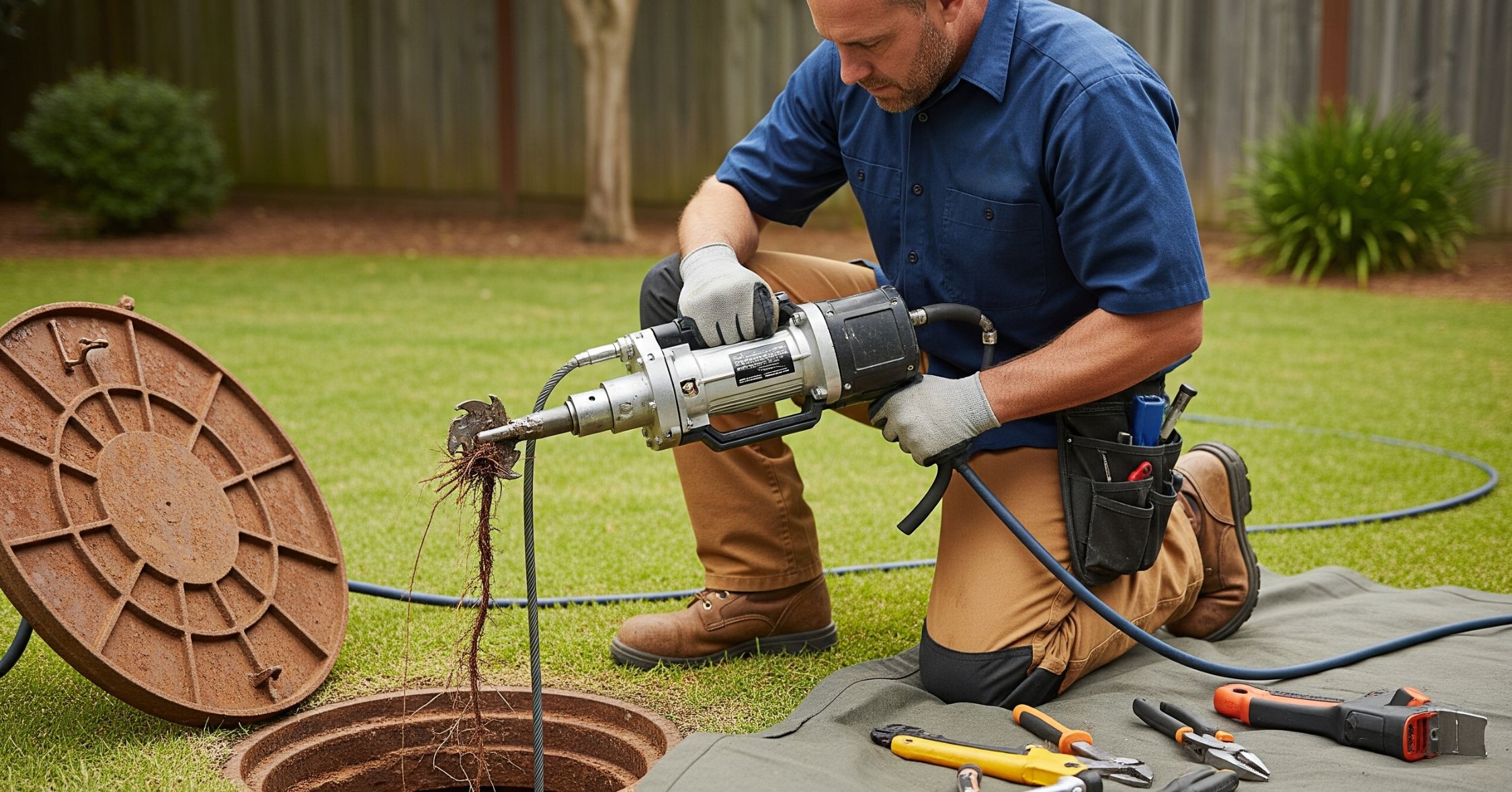
While removing tree or plant roots from your drain pipes on your own is rarely practical, a professional root removal service can clear the line so it can be inspected and repaired. Using augers and cutters, technicians can clear roots and debris from inside the pipe. Some also use a rotating head fitted with scrapers and brushes, drawn through the pipe with a powered cable. Hydro jetting is another effective option — a high-pressure water stream that scours the inside walls of the sewer line, clearing residual roots, sludge, and root fragments in the process.
Chemical Root Control
There are chemicals available that can slow root growth inside pipes. However, they can also harm nearby plants and pose an environmental concern. Copper sulfate is one root-control substance that many states consider safe for residential waste systems, and some homeowners and plumbers use it by putting it down a sink or toilet. Its effectiveness is limited because it doesn’t stay in the pipe for long. A foaming treatment containing dichlobenil may last longer — it clings to the roots and pipe walls and kills root growth over a period of hours, though it can take months for the roots to fully break down.
How Much Does Root Removal or Sewer Line Repair Cost?
A single mechanical root-cutting or hydro jetting visit for a residential line typically runs $250–$600. If a camera inspection reveals a cracked or offset pipe causing repeat root intrusion, spot repair or slip-lining usually falls between $1,000 and $4,000, while a full sewer line replacement can range from $3,000 to $10,000 or more depending on length, depth, and access. A camera inspection up front is the best way to know which category you’re actually dealing with before paying for a fix.
There are various reasons that you may have a worn sewer pipe. Old pipe materials, root intrusion, ground settling, and poorly installed or maintained sewer lines can all result in clogged pipes. If you have blocked pipes that a plunger won’t clear, contact The 5 Star Plumbing today. We can diagnose the problem, repair it promptly, and get your water flowing smoothly. Related reading: Top Drain Maintenance Tips to Keep Pipes Flowing.
Frequently Asked Questions
How do I know if tree roots are in my sewer line?
Slow or gurgling drains, sewage odors, unusually lush patches of lawn, and recurring clogs in the same area are the most common warning signs. A camera inspection gives a definitive answer.
How far should trees be planted from a sewer line?
As a general rule, plant new trees at least 10 feet from sewer lines, and choose slow-growing species with less aggressive root systems near any underground pipe.
Will cutting the tree down fix the problem?
Not by itself. Roots already inside the pipe will continue to grow for a period even after the tree is removed, and the crack or joint that let them in will still need to be repaired or lined.
Is hydro jetting safe for old sewer pipes?
In most cases, yes, when performed by a licensed plumber who can gauge the pipe’s condition first. Severely deteriorated pipes may need a camera inspection before jetting to avoid further damage.