If your tank is rumbling, running out of hot water sooner or sending rusty water to the faucets, sediment is the usual cause, and learning how to flush a water heater is the fix. Flushing drains the minerals that settle at the bottom of the tank. Most manufacturers recommend doing it at least once a year, and every six months in hard-water areas. With a garden hose, a bucket and an hour or two, many homeowners can do it themselves.
This guide shows how to flush a water heater step by step for gas and electric tanks, using the manufacturers’ own instructions from Rheem and A.O. Smith. It also covers how often to flush in Los Angeles and Orange County, where tap water in many areas is hard, what a professional flush costs, and when to leave it to a plumber.
What This Guide Covers
- Why learn how to flush a water heater?
- How often to flush in Los Angeles and Orange County
- Tools and safety gear you need
- How to flush a water heater, step by step
- Common problems while flushing
- Tankless units: descale instead
- DIY vs. professional flush cost
- When to call a pro
- Frequently asked questions
Why learn how to flush a water heater?
As water heats, minerals such as calcium and magnesium separate out and settle on the bottom of the tank. Rheem explains that this sediment acts like insulation between the burner or element and the water. The heater has to run longer to reach temperature, uses more energy, and wears out its heating parts faster.
Signs your tank is full of sediment, according to Rheem:
- Rumbling, popping or crackling sounds while it heats (see what each water heater noise means)
- Rusty or cloudy hot water
- Hot water that runs out sooner than it used to
- Slower recovery after showers
- Rising gas or electric bills with no change in use
Knowing how to flush a water heater, and doing it on schedule, keeps sediment from building into a hard layer that is much tougher to remove.
How often to flush in Los Angeles and Orange County
When you plan how to flush a water heater on a schedule, start with the manufacturers’ advice. Rheem and A.O. Smith both recommend flushing a tank water heater at least once a year, and more often if your water is hard. Rheem suggests every six months for hard water.
Hardness matters in Southern California. The U.S. Geological Survey classifies water above 120 mg/L as hard and above 180 mg/L as very hard. In LADWP’s latest drinking water quality report, average hardness ranged from about 103 mg/L for Los Angeles Aqueduct water to about 234–236 mg/L for water from the Metropolitan Water District’s Weymouth and Diemer plants, depending on where in the city you live.
| Water hardness (USGS scale) | mg/L as calcium carbonate | Suggested flush schedule |
|---|---|---|
| Soft | 0–60 | Once a year |
| Moderately hard | 61–120 | Once a year |
| Hard | 121–180 | Every 6–12 months |
| Very hard | Above 180 | About every 6 months |
Not sure what you have? Your water supplier’s annual water quality report lists hardness. In Orange County, check the report from your city or water district. If you’re on very hard water, plan to repeat these steps on how to flush a water heater twice a year.
Tools and safety gear you need
You don’t need special tools to learn how to flush a water heater:
- A garden hose long enough to reach a floor drain, driveway or yard
- A bucket for checking the water for sediment
- Thick gloves and safety goggles (A.O. Smith recommends both)
- A flat-head screwdriver if your drain valve has a slotted stem
- Towels in case of spills
Before you start, know where your home’s main water shutoff is. If you haven’t found it yet, our guide on shutting off the water to your house walks you through it.
How to flush a water heater, step by step
Here’s how to flush a water heater the way the manufacturers describe it. These steps combine Rheem’s and A.O. Smith’s instructions for tank water heaters. Your model’s manual comes first, so check it for any differences.
Step 1: Turn off the gas or power and let it cool
For an electric heater, switch off its breaker. For a gas heater, turn the gas control dial to OFF. A.O. Smith suggests turning the heater off a few hours before draining so the water cools and you lower the risk of scalding.
Step 2: Shut off the cold water supply
Close the cold water valve on the pipe that feeds the top of the tank. If there isn’t one, close the home’s main shutoff.
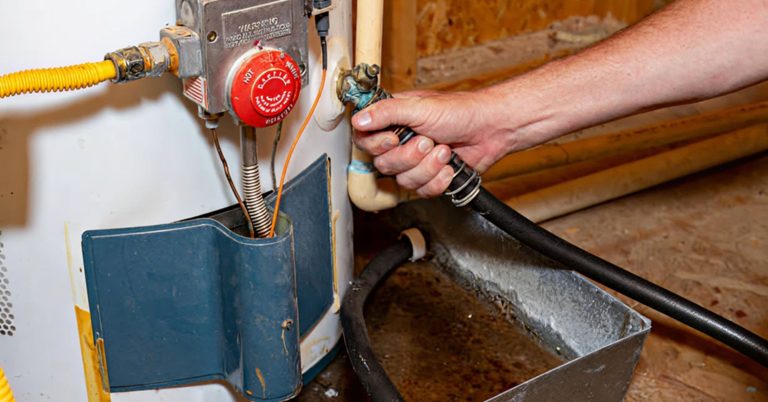
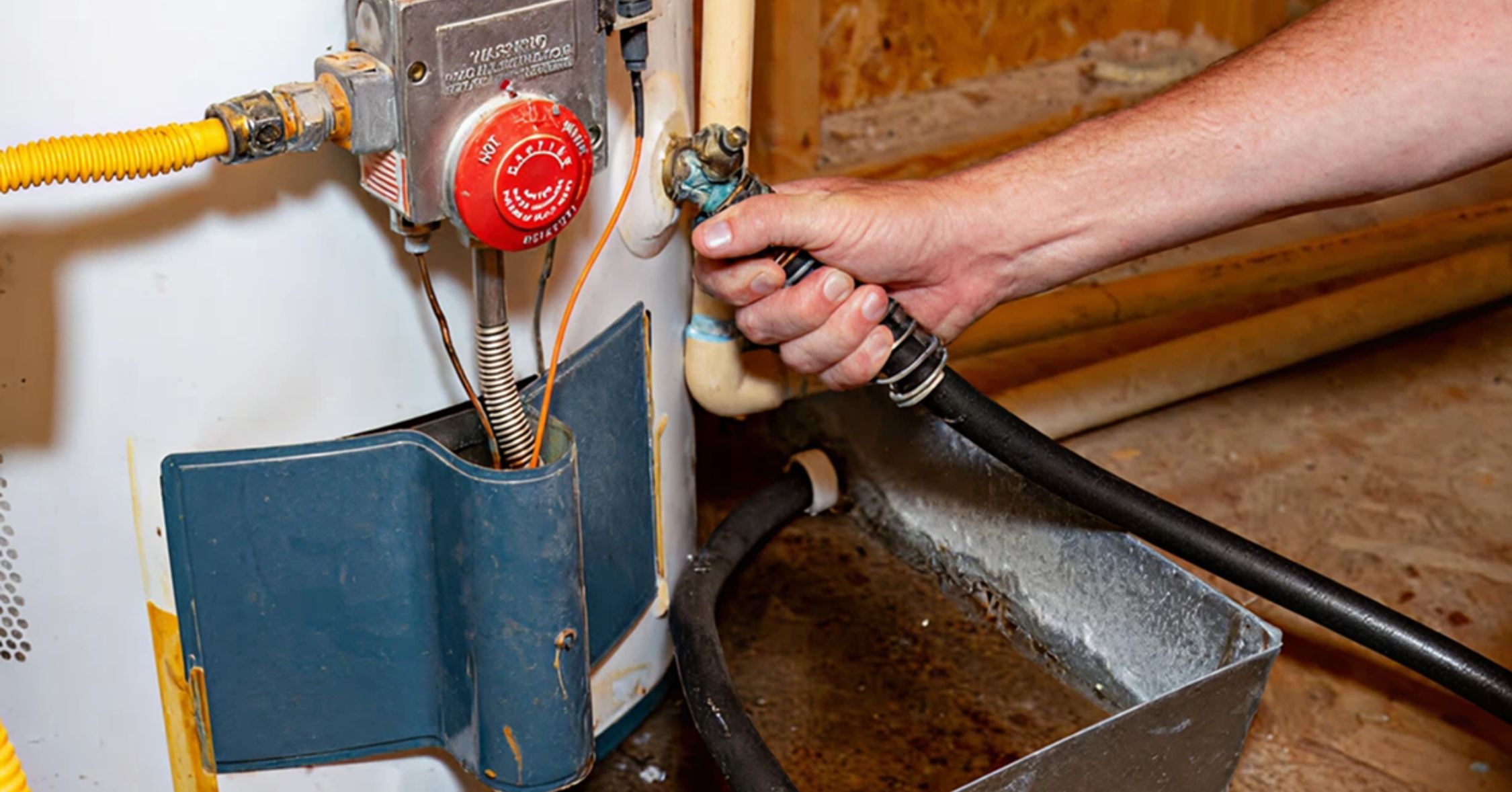
Step 3: Connect the hose to the drain valve
Screw the hose onto the drain valve near the bottom of the tank. Run the other end to a floor drain or outside to a spot where hot water won’t damage plants, pets or surfaces.
Step 4: Let air into the tank
Open a hot water faucet somewhere in the house so the tank can drain. Rheem’s instructions also open the temperature and pressure relief valve at this point.
Step 5: Open the drain valve and drain the tank
Open the drain valve and let the tank empty. If you’re draining into a bucket, empty it before it overflows. Expect the first water to look cloudy or carry bits of sediment.
Step 6: Flush out the remaining sediment
With the drain valve still open, turn the cold water supply back on for short bursts to stir up what’s left on the bottom. A.O. Smith’s guidance is to keep flushing with cold water until you no longer see sediment coming out. Catch a sample in the bucket to check. People who are new to how to flush a water heater often skip this step, but it’s the one that removes the most sediment.
Step 7: Close the drain valve and refill
Turn off the cold supply, close the drain valve and remove the hose. Close the relief valve if you opened it. Then turn the cold supply back on with a hot faucet open. Following Rheem’s steps, wait until water flows steadily from the hot taps, which tells you the tank is full. A.O. Smith also recommends running the hot tap for at least three minutes to clear trapped air.
Step 8: Restore the gas or power
Only after the tank is full, switch the breaker back on or turn the gas control back on and relight the pilot according to the manufacturer’s instructions. Check the drain valve over the next day for drips. That’s how to flush a water heater from start to finish.
Common problems while flushing
Even when you know how to flush a water heater, these issues can come up:
- The drain valve won’t open or barely trickles: sediment may be clogging it. A.O. Smith says to call a plumber or technician if you can’t drain the tank.
- The drain valve drips after you close it: close it snugly again and recheck. If it keeps dripping, a plumber can replace the valve.
- Water is still full of sediment after several flushes: the buildup may have hardened. Rheem notes that older tanks with hardened sediment can leak or be damaged by DIY flushing.
- The tank still rumbles after flushing: Rheem lists ongoing noise as a reason to call a professional.
- Water appears around the base afterward: read our guide to a water heater leaking from the bottom to find the source.
Tankless units: descale instead
The steps above for how to flush a water heater apply to tank heaters only. Rheem and A.O. Smith both note that tankless water heaters don’t get flushed the same way; they need descaling, usually with a kit that circulates a cleaning solution through the heat exchanger. See our guide to tankless water heater flushing and descaling for those steps.
DIY vs. professional flush cost
Once you know how to flush a water heater, doing it yourself costs little more than a hose and your time. If you’d rather hire a pro, here’s what Angi reports nationally:
| Service | Typical cost (Angi) |
|---|---|
| Professional flush, average | About $160 |
| Professional flush, typical range | $110–$200 |
| Tank water heater | $75–$150 |
| Tankless water heater | $150–$250 |
| Time on site | 1–3 hours |
Angi also recommends replacing the anode rod every three to five years, which a plumber can check during a flush.
The 5 Star Plumbing’s typical price for a water heater flush is $300–$400; the exact price is confirmed after the technician sees the job.
When to call a pro
Knowing how to flush a water heater doesn’t mean every tank should be flushed at home. Rheem recommends calling a professional if:
- The drain valve won’t open or leaks
- You see heavy rust or corrosion on the tank or fittings
- Noise continues after flushing
- The heater is 8–12 years old or older
- You aren’t comfortable working around gas or electrical parts
A professional water heater flush service also gives a plumber a chance to check the relief valve, venting and anode rod at the same visit.
The bottom line
Now you know how to flush a water heater: turn off the heat source, shut the cold supply, drain through a hose, flush with cold water until it runs clear, refill completely and only then restore power or gas. Do it once a year, or every six months if your Los Angeles or Orange County water is hard, and your heater will run quieter and more efficiently.
If you’d rather not do it yourself, or the drain valve won’t cooperate, The 5 Star Plumbing handles water heater repair, maintenance and installation with experience since 2006. We’re a family-owned, licensed plumber (CA license #1041772) serving Los Angeles, Orange County and the surrounding communities, 24/7. Call (888) 909-0120 or request service online.
Frequently asked questions: how to flush a water heater
How long does it take to flush a water heater?
Plan on about one to three hours, which matches Angi’s estimate for a professional visit. Add a few hours beforehand if you let the tank cool, as A.O. Smith suggests.
Is it hard to learn how to flush a water heater?
Not usually. If you can turn off the breaker or gas control, close a valve and connect a garden hose, you can follow the steps. Call a plumber if the valve is stuck, the tank is old or you’re unsure about gas or electrical parts.
How often should you flush a water heater?
At least once a year, according to Rheem and A.O. Smith, and about every six months if your water is hard, which is common in parts of Los Angeles.
Can I flush a water heater without turning off the water?
You need to shut off the cold supply to drain the tank. The cold water is only turned back on in short bursts to stir up sediment, and then to refill the tank.
Do I need to drain the tank completely?
Rheem’s steps drain the tank completely before flushing. A full drain followed by a cold-water flush removes the most sediment.
Is it safe to flush an old water heater?
It can be risky. Rheem notes that older tanks with hardened sediment may leak or be damaged by DIY flushing, and recommends a professional for heaters 8–12 years old or older.
What happens if you never flush your water heater?
Sediment keeps building up, so the heater runs longer, uses more energy and wears out its heating parts faster, according to Rheem. You may also notice noise and less hot water.
When can I turn the power back on?
Only after the tank is completely full, which you’ll know when water flows steadily from an open hot water faucet. Then switch the breaker back on or relight the gas pilot per the manufacturer’s instructions.
Do tankless water heaters need flushing?
The tank steps for how to flush a water heater don’t apply to them; they need descaling instead. Follow your manual or have a plumber descale the unit with a kit.
Sources: Rheem — How Often to Flush Your Water Heater (and How to Do It) · A.O. Smith — How to Drain a Water Heater · Angi — How Much Does It Cost to Flush a Water Heater? · LADWP — Drinking Water Quality Report · USGS — Hardness of Water