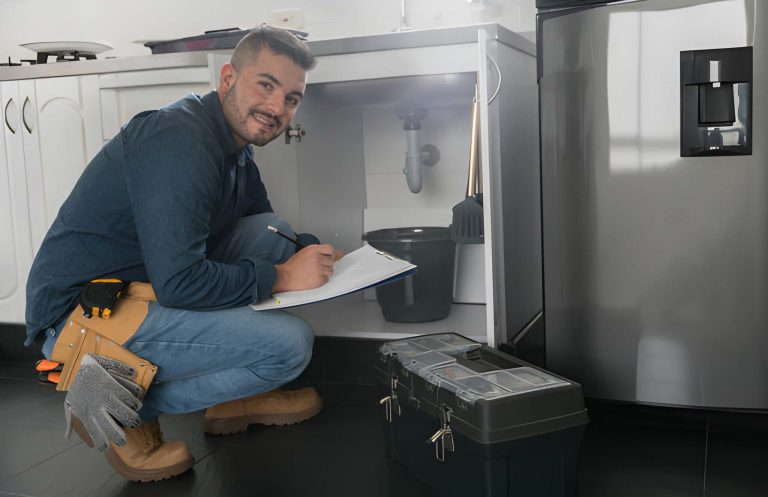
Most homeowners in Los Angeles need a tankless water heater flush — also called descaling — at least once a year — and in the hardest-water parts of the city, more often. If your unit hasn’t been flushed in the last 12 months, it’s very likely already working harder than it should to deliver the same hot water it did on day one.
That matters because scale doesn’t just cost you efficiency. Left long enough, it leads to error codes, lukewarm showers, and eventually heat exchanger damage — the most expensive part of the unit to fix. This guide covers how often to descale in LA’s water, the warning signs, what a professional service involves, DIY versus pro, and what drives the cost. For homes across Los Angeles and Orange County, The 5 Star Plumbing’s tankless descaling service handles the full flush-and-inspect process.

What This Guide Covers
- Why LA water is hard on tankless units
- How often to descale
- Warning signs your unit is overdue
- What a professional descaling involves
- DIY vinegar flush vs. professional service
- What drives the cost
- What happens if you skip it
- Descale or replace?
- Frequently asked questions
Why Los Angeles water is hard on tankless water heaters
A traditional tank water heater collects sediment at the bottom of the tank, which is why it gets a drain-and-flush. A tankless unit has no tank. Instead, water moves through a compact heat exchanger every time you open a hot tap, and the dissolved calcium and magnesium in the water come out of solution and bake onto its surfaces as it heats. Over time that scale layer acts like insulation, so the burner or elements work harder to deliver the same temperature.
Los Angeles water is hard by any standard. According to LADWP’s water quality data, average hardness ranges from about 8.6 grains per gallon in the San Fernando Valley and Western Los Angeles, to 9.8 in Silver Lake, Downtown, and South LA, to about 16.3 in Eastern Los Angeles and the Harbor area. LADWP classifies anything above 7 grains per gallon as hard. Because the city blends several water sources, the water reaching your home can also change during repairs or maintenance.
How often you need a tankless water heater flush
Navien recommends descaling at least once a year, and more often with higher mineral content, a higher temperature setting, or heavy hot water use. Other major manufacturers give similar guidance. In LA’s hard water, treat once a year as the minimum, not the target.
| Your situation | Suggested descaling interval |
|---|---|
| Hard water, 1–3 people, normal use | Every 12 months |
| Very hard water (e.g. Eastern LA, Harbor area) or a larger household | Every 6–9 months |
| Recirculation loop or a high temperature setting | Every 6–9 months |
| Whole-house water softener installed | Every 12 months, adjust after inspection |
| Never descaled and 2+ years old | Schedule a service now, then set an interval |
Not sure about your water? The simplest rule: if it’s been 12 months and you can’t remember the last flush, it’s time.
Warning signs your tankless water heater needs descaling
A tankless unit rarely fails without warning. It degrades gradually, and most of the signs are easy to dismiss until they aren’t:
- Temperature swings mid-shower — water that starts hot and drifts toward lukewarm without you touching the handle.
- Hot water takes longer to arrive than it used to.
- Lower flow on the hot side, especially when two fixtures run at once.
- Higher gas or electric bills with no other explanation.
- Popping, rattling, or “kettling” sounds from the unit while it runs.
- Error codes on the display, particularly ones tied to flow or heat exchanger temperature.
- Hot water reaching some fixtures but not others — a pattern that came up in one of our own customer calls and often points to restricted flow rather than a dead unit.
- It’s simply been 12+ months. Scale builds up whether or not you’ve noticed symptoms yet.
What happens during professional tankless water heater descaling
- Shut off power and gas. The unit is de-energized before any work begins.
- Connect to the isolation valves. Most installations have service (isolation) valves that let a technician connect a small pump without disconnecting the unit from your plumbing. If yours doesn’t have them, installing them is a one-time add that makes every future service faster.
- Circulate the descaling solution. A descaling solution or white vinegar is pumped through the heat exchanger. Navien’s guidance calls for at least 45 minutes of circulation.
- Flush and rinse. The system is flushed with fresh water — Navien recommends at least 10 minutes — to clear the solution and loosened scale.
- Clean the inlet filter and check venting. A thorough service also cleans the inlet water filter screen and checks the venting and combustion air intake, since both affect performance.
- Restart and test. Gas and power are restored, and the technician confirms steady temperature and flow and that any error code has cleared.
DIY tankless water heater flush vs. professional descaling
| DIY vinegar flush | Professional descaling | |
|---|---|---|
| Removes light to moderate scale | Yes | Yes |
| Handles heavy, long-neglected buildup | Often not fully | Yes |
| Inlet filter cleaning | Sometimes | Yes |
| Venting and combustion check | No | Yes |
| Installs isolation valves if missing | No | Yes |
| Service record for your files | No | Yes |
| Risk around gas and electrical components | Real, if you’re unfamiliar | Handled by a licensed technician |
A DIY flush is a reasonable stopgap if your unit already has isolation valves and you’re comfortable shutting off gas and power. But Navien itself notes that descaling done incorrectly can damage the unit and void the warranty, which is why many homeowners leave it to a professional — especially on a gas-fired unit, one still under warranty, or one already showing an error code.
What drives the cost of a tankless water heater flush
There’s no single price that fits every unit, because a few real variables decide the job:
- Whether isolation valves are installed. If not, adding them is extra labor on the first visit, but it makes every future service quicker.
- Access to the unit. A unit on a garage or exterior wall is faster to service than one in a tight closet or attic.
- How much scale has built up. A unit that’s never been serviced takes longer than one on a regular schedule.
- Anything found during the inspection, such as a clogged inlet filter or venting issue.
For an exact price on your unit, contact us — and check our current LA plumbing promotions, since water heater services are often included in seasonal offers. Before scheduling with any company, it’s fair to ask whether a trip or service fee applies and whether it’s credited toward the work.
What happens if you skip tankless water heater descaling
Scale doesn’t stop building just because you’ve stopped noticing it. As it thickens, efficiency drops, error codes appear, and eventually the heat exchanger can be damaged — often the most expensive component to repair or replace. Many manufacturer warranties also expect the unit to be properly maintained, so keeping a service record is worth the effort.
We see the downside of waiting in our own calls. One homeowner, referred to us by another local company, had a tankless unit that had failed three days earlier, leaving the house without hot water while they searched for an open appointment. Another called about a water heater that had stopped heating properly and turned out to be out of warranty. Neither situation started as an emergency — both started as maintenance that got pushed back. A scheduled descaling happens on your calendar, not on the unit’s failure timeline.
Should you descale an older unit or replace it?
If your tankless water heater is otherwise healthy — no failed parts, no recurring error codes — descaling is almost always worth it. It costs a fraction of a new unit and often fully restores lost output. The math changes if the heat exchanger has already failed, if error codes persist after a proper descaling, or if the unit is well past its expected service life. A technician can usually tell you which situation you’re in during the same visit. If repair isn’t worth it, see our options for water heater repair and replacing an aging unit.
The bottom line
In a hard-water city like Los Angeles, a tankless water heater isn’t “install it and forget it.” Tankless water heater descaling at least once a year — and every 6 to 9 months in the hardest-water areas or busiest households — is what keeps hot water steady, bills in check, and the heat exchanger healthy.
If you’re not sure when your unit was last serviced, or you’re already seeing the signs above, The 5 Star Plumbing’s tankless water heater team can inspect, descale, and add isolation valves if they’re missing — all in the same visit. Want the tank version of this maintenance instead? See our water heater flush service. If your unit has stopped working entirely, our 24/7 emergency plumbing team can help.
Frequently asked questions: tankless water heater flush and descaling
How often should a tankless water heater be descaled in Los Angeles?
At least once a year. Manufacturers like Navien recommend annual descaling as a minimum, and LA’s hard water — especially in Eastern Los Angeles and the Harbor area — often justifies every 6 to 9 months for larger households or units with a recirculation loop.
How hard is the water in Los Angeles?
LADWP reports average hardness of roughly 8.6 to 16.3 grains per gallon depending on the area, and classifies anything above 7 as hard. The San Fernando Valley and Western LA sit at the lower end, while Eastern Los Angeles and the Harbor area are the hardest.
What are the signs a tankless water heater needs descaling?
Temperature swings in the shower, a longer wait for hot water, weaker hot water flow, rising energy bills, popping or rattling sounds, and error codes on the display. A unit that’s gone more than 12 months without service should be descaled even if you haven’t noticed symptoms.
Can I descale a tankless water heater myself?
If the unit already has isolation valves and you’re comfortable shutting off gas and power, a vinegar flush is possible. Manufacturers warn that doing it incorrectly can damage the unit and void the warranty, so professional service is the safer choice for gas units, units under warranty, or units showing error codes.
How long does professional descaling take?
Most visits take about an hour or a bit longer. The descaling solution itself circulates for at least 45 minutes, followed by a fresh-water flush, and the visit runs longer if isolation valves need to be installed first.
Do I need isolation valves to descale a tankless water heater?
Yes. Isolation valves let a technician circulate cleaning solution through the unit without disconnecting it from your plumbing. If your unit doesn’t have them, a one-time installation makes every future service faster.
Is a tankless water heater flush the same as flushing a tank water heater?
No. A tank flush drains sediment that settles at the bottom of a storage tank. A tankless descale circulates a cleaning solution through the heat exchanger, where minerals build up — different equipment and a different process.
What happens if I never descale my tankless water heater?
Scale keeps building on the heat exchanger, reducing efficiency and hot water output, triggering error codes, and eventually risking damage to the heat exchanger — usually the costliest part of the unit to fix.
Will descaling fix an error code?
Sometimes. If the code relates to flow restriction or heat exchanger temperature, descaling often clears it. If it points to an ignition, venting, or electrical fault, the unit needs a diagnostic visit instead.
Sources: LADWP — Water Quality FAQs (hardness by area) · Navien — How to Descale Tankless Water Heaters