Low water pressure in house plumbing is one of the most common complaints homeowners call about, and one of the easiest to misdiagnose. A weak shower can come from a clogged showerhead that takes five minutes to clean, a pressure regulator that has worn out, a hidden leak that is quietly wasting water, or old pipes narrowed by mineral buildup. The fix depends entirely on which one you have.
This guide shows you how to narrow down the cause, test your pressure at home, try the simple fixes first, and recognize when the problem needs a licensed plumber. It brings together our earlier articles on leaks, prevention and pressure problems into one complete guide.
What This Guide Covers
- Start here: how widespread is the problem?
- The most common causes of low water pressure
- How to test your water pressure at home
- Fixes you can try yourself
- When to call a plumber, and what it costs
- How to prevent pressure problems
- Frequently asked questions
Start here: how widespread is the problem?
Before you buy parts or call anyone, figure out where the pressure is low. That single observation rules out most of the possible causes. Walk through the house and run each faucet, shower and outdoor spigot, hot and cold separately.
| What you notice | Most likely cause | First thing to check |
|---|---|---|
| One faucet or shower is weak, the rest are fine | Clogged aerator, showerhead or cartridge at that fixture | Remove and clean the aerator or showerhead |
| Only hot water is weak, everywhere | Sediment in the water heater, or a valve at the heater partly closed | Shutoff valve on the water heater’s cold inlet |
| Every fixture is weak, hot and cold | Main shutoff partly closed, failing pressure regulator, leak, or old pipes | Main shutoff valve and a pressure gauge reading |
| Pressure drops sharply when a toilet flushes or a second fixture runs | Pressure regulator, undersized or narrowed supply pipes | Pressure gauge reading with and without other fixtures running |
| Neighbors have the same problem | Water utility supply issue | Call your water utility |
The most common causes of low water pressure
A main shutoff or meter valve that isn’t fully open
This is the simplest cause and it is surprisingly common after any plumbing work or a meter replacement. Check that the main shutoff where the water line enters the house is fully open, and that the valves on each side of the water meter are fully open too. A partly closed valve restricts flow to the whole house.
Clogged aerators, showerheads and cartridges
Minerals in hard water build up inside faucet aerators and showerhead nozzles, and debris from the water main can lodge in the small screens. When the problem is limited to one fixture, this is usually the reason. A worn shower cartridge can also restrict flow; see our guide to signs your shower cartridge is going bad.
A failing pressure regulator (PRV)
Many homes have a pressure reducing valve, a bell-shaped brass valve near the main shutoff, that lowers incoming street pressure to a safe level for household plumbing. Inside are springs and diaphragms that wear out. A failing regulator can drift low and starve the house of pressure, or fail open and let pressure run too high. Angi puts the expected lifespan of a regulator at 10 to 15 years. If yours is older than that and pressure has been dropping, it is a prime suspect. Our post on low water pressure after a toilet flush covers this symptom in detail.
Hidden leaks
Water that escapes through a cracked pipe, a slab leak or a failing connection never reaches your faucets. Small leaks also add up: the U.S. Environmental Protection Agency estimates the average household’s leaks can waste nearly 10,000 gallons of water every year. Signs to watch for include:
- A water bill that rises without any change in how you use water
- Damp spots, stains or bubbling paint on walls, ceilings or floors
- The sound of running water when everything is turned off
- Warm spots on the floor, which can point to a hot water line leaking under the slab
- Mold or a musty smell in one area
We explain more of these warning signs in rising water bills and wall stains caused by hidden leaks.
Old pipes narrowed by mineral buildup
In older homes, steel supply pipes can gradually fill with lime and corrosion deposits on the inside, which shrinks the space water can flow through. Home repair writer Don Vandervort of HomeTips describes this as the most common cause of low pressure in homes more than 20 years old, and notes that fixing it usually means replacing the affected piping. When pressure is low everywhere and the valves and regulator check out, the pipes themselves are the next thing to look at.
Sediment in the water heater
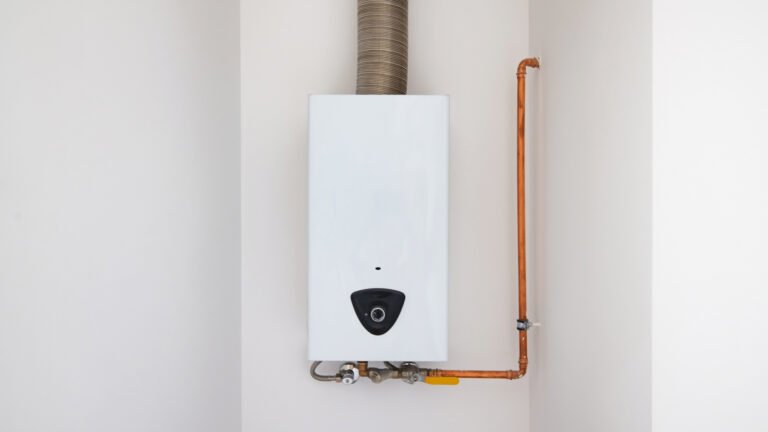
If cold water flows normally but hot water is weak at every fixture, the problem is between the water heater and your faucets. Sediment that settles in a tank, or scale in a tankless unit, can restrict hot water flow. A partly closed valve at the heater is another easy thing to rule out.
Problems on the utility side
Sometimes the cause isn’t in your home at all. Main breaks, maintenance work and high demand can all lower supply pressure for a whole street. If neighbors report the same thing, call your water utility before you call a plumber.
How to test your water pressure at home
A screw-on water pressure gauge from a hardware store gives you a number instead of a guess. Here’s how to use it:
- Turn off every faucet, appliance and irrigation system in the house.
- Thread the gauge onto an outdoor hose bib or the laundry faucet closest to where the water line enters the house.
- Open the faucet fully and read the gauge. This is your static pressure.
- Have someone run a shower or flush a toilet and watch how far the reading drops.
There isn’t one “correct” number, but there are useful reference points. The 2025 California Plumbing Code requires a pressure regulator wherever static pressure in the supply piping exceeds 80 psi, and the pressure must be reduced to 80 psi or less. One California water district notes that most homeowners set their pressure at approximately 50 psi. A reading that is far below what you had before, or one that collapses whenever a second fixture runs, points to a problem worth fixing.
The water meter leak test
To check for a hidden leak, turn off every water fixture and appliance, then look at your water meter. Note the reading or watch the leak indicator for 15 to 30 minutes. If the meter moves while nothing is running, water is going somewhere it shouldn’t.
Fixes you can try yourself
- Open the valves fully. Check the main shutoff, the meter valves and the small stop valves under sinks and behind toilets.
- Clean aerators and showerheads. Unscrew them, rinse out debris and soak them in white vinegar overnight to dissolve mineral scale. Replace them if they stay clogged.
- Check the shutoff at the water heater if only hot water is affected, and flush the tank if it hasn’t been flushed in a long time.
- Ask your neighbors and your utility whether there is an outage, main break or maintenance in your area.
- Leave the pressure regulator to a professional. Adjusting it is possible, but setting it too high can damage fixtures and appliances, and a worn regulator won’t hold a new setting anyway.
When to call a plumber, and what it costs
Call a licensed plumber when low water pressure in house plumbing persists throughout the home with the valves fully open, when your gauge shows pressure dropping sharply under demand, when the meter test points to a leak, or when your home still has older steel supply pipes.
| Job | National cost data | The 5 Star Plumbing typical price |
|---|---|---|
| Pressure regulator valve replacement | $200 to $700, average about $400 (Angi, 2026) | $600 to $2,000 |
| Water leak repair | Varies by location and access | $500 to $850 |
| Shower head replacement | Varies by fixture | $150 to $200 |
| Faucet installation | Varies by fixture | $250 to $350 |
| Repiping | Varies by home size and pipe material | $2,000+ |
The 5 Star Plumbing prices are typical ranges. The exact price is confirmed after the technician sees the job.
If the problem turns out to be a leak, our water leak detection service locates it before any walls or floors are opened. If aging pipes are the cause, read our repiping FAQ guide or see our home repiping service. For larger projects, ask about our financing options.
How to prevent pressure problems
Most cases of low water pressure in house plumbing build up gradually, so a few habits go a long way:
- Clean aerators and showerheads every few months if your water is hard.
- Watch your water bill and meter. An unexplained jump is often the first sign of a hidden leak.
- Know the age of your pressure regulator and plan to replace it near the end of its service life rather than waiting for a failure.
- Keep up water heater maintenance. Regular water heater flushing limits sediment that restricts hot water flow.
- Have older plumbing inspected. If your home still has its original steel supply lines, a plumber can tell you how much life they have left.
The bottom line on low water pressure in house plumbing
Start by working out whether the problem is at one fixture, only on the hot side, or everywhere. Single-fixture problems are usually a quick cleaning job. House-wide low pressure usually comes down to a valve, a worn pressure regulator, a hidden leak or aging pipes, and a pressure gauge and a meter check will tell you a lot before anyone opens a wall.
If you’d rather have it diagnosed, The 5 Star Plumbing is a family-owned and operated company with experience since 2006 (California contractor license #1041772), available 24/7 in Los Angeles and the surrounding communities. Call (888) 909-0120 or contact us online.
Frequently asked questions: low water pressure in house
Why is my water pressure suddenly low in the whole house?
A sudden drop everywhere usually means a valve was left partly closed, the pressure regulator failed, a significant leak opened up, or there is a problem on the utility’s side. Check the main shutoff first, then ask neighbors whether they have the same issue.
Why is only my shower or one faucet weak?
When the rest of the house is fine, the cause is almost always at that fixture: a clogged aerator or showerhead, a worn cartridge, or a partly closed stop valve under the sink.
Why is my hot water pressure low but the cold is fine?
That points to the water heater or the hot side of the plumbing. Sediment in the tank, scale in a tankless unit, or a partly closed valve at the heater are the usual causes.
What is normal water pressure for a house?
There is no single standard, but California’s plumbing code requires a pressure regulator where static pressure exceeds 80 psi, and one California water district notes most homeowners set their pressure at about 50 psi. A gauge at an outdoor spigot gives you your actual reading.
Can a hidden leak cause low water pressure?
Yes. Water lost through a leak doesn’t reach your fixtures. A water meter that keeps moving while everything is off is a strong sign of a leak.
How long does a water pressure regulator last?
Angi estimates a typical lifespan of 10 to 15 years. Regulators near or past that age are common causes of gradual pressure loss.
How much does it cost to fix low water pressure?
It depends on the cause. Cleaning an aerator costs nothing. Angi reports pressure regulator replacement typically runs $200 to $700 nationally, and The 5 Star Plumbing’s typical price for that job is $600 to $2,000, with the exact price confirmed after the technician sees the job. Leak repairs and repiping vary with the extent of the work.
Is the pressure regulator my responsibility or the water company’s?
The regulator on your side of the meter generally belongs to the property owner. One California water district states that the property owner is responsible for installing and maintaining it. Check with your own utility if you aren’t sure where your service line begins.
Sources: Angi — Water Pressure Regulator Replacement Cost (2026) · U.S. EPA — Fix a Leak Week (2024) · 2025 California Plumbing Code §608.2 · Pressure Regulator Information (water district customer guide) · HomeTips — Low Water Pressure Problems