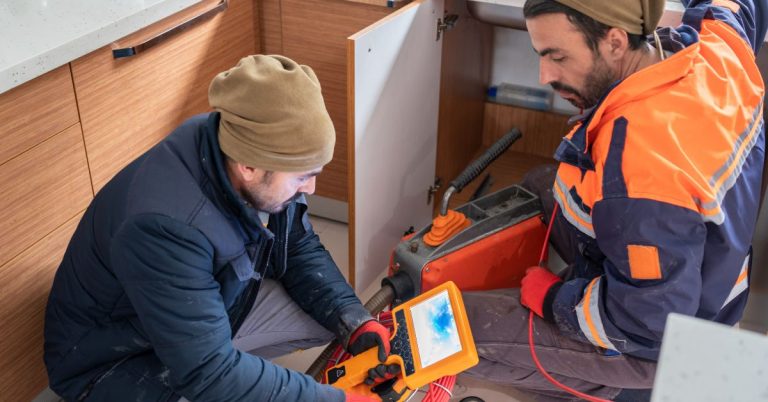
If you’re wondering why your drains are backing up at once — a toilet gurgling, the shower filling with water, the kitchen sink draining slowly, all on the same day — it’s almost never a coincidence. When more than one drain acts up together, the problem usually isn’t in any single fixture. It’s in the shared line they all drain into, and most often that’s a partial or full clog in your main sewer line.
That’s a different, and generally more urgent, problem than one slow sink, and it changes what you should do next. This guide explains why it happens, how to tell a single-fixture clog from a shared-line problem, what causes main line backups in Los Angeles homes, and what a professional visit actually involves. For homeowners and businesses across Los Angeles and Orange County, The 5 Star Plumbing can step in when the situation calls for a camera and professional equipment rather than another bottle of drain cleaner.
What This Guide Covers
- Why one blockage shows up in several drains
- Single fixture vs. shared line: how to tell
- What causes a main line backup in Los Angeles
- What to do right now
- DIY vs. calling a professional
- What happens during a professional visit
- Snaking vs. hydro jetting
- What drives the cost
- When to treat it as an emergency
- Frequently asked questions
Why are all my drains backing up at once?
Every drain in your home — sinks, showers, tubs, toilets, the washing machine, the dishwasher — eventually feeds into one shared pipe: the main sewer line, also called the sewer lateral, which carries wastewater from your property to the public sewer. Along the way, smaller branch lines merge into that main line, usually with a cleanout at one or more key points.
If something blocks the shared line downstream of where several fixtures join, none of those fixtures have anywhere to send their water. The backup rises toward the path of least resistance, which is usually the lowest drain opening in the house. That’s why a main line clog often shows up first as a gurgling toilet, a ground-floor shower or tub that fills with water, or a floor drain bubbling up — even though nothing is wrong with that particular fixture.
A single clogged sink is different. That’s almost always a local blockage in that fixture’s trap or branch line, and it won’t affect anything else in the house. The number of fixtures affected is your single best diagnostic clue.
Single fixture vs. shared line: how to tell the difference
Before you plunge anything, take two minutes to note which drains are acting up and when. The pattern tells you most of what you need to know.
| What you notice | What it usually means |
|---|---|
| Only one sink or shower drains slowly | A local clog in that fixture’s trap or branch line |
| A toilet gurgles when the washing machine or dishwasher drains | A shared line is partly blocked downstream — an early warning sign |
| Two or more fixtures back up around the same time | The main sewer line, or a branch line serving those fixtures |
| The lowest drain in the house (a ground-floor tub, shower, or floor drain) backs up first | A classic main line symptom — water is rising at the lowest point |
| Backups happen mainly when you run laundry or a big load of water | The line is already narrowed, and the extra volume pushes it over the edge |
| A sewage smell comes with the backup | A strong sign of a main line or sewer-side problem, not a simple fixture clog |
If two or more fixtures are showing anything in the right-hand column, you’re very likely dealing with a shared-line problem — and nothing poured down a single sink is going to fix it.
What causes drains backing up at once in Los Angeles homes
A handful of causes account for most main sewer line backups. Here they are, roughly in order of how often they turn up:
- Tree root intrusion. Roots are drawn to the moisture inside sewer lines and work their way in through small cracks and joints, especially in older clay or cast iron laterals. Many established LA neighborhoods combine mature street trees with decades-old sewer pipes, which makes this a common culprit. Once inside, roots catch debris and keep growing, narrowing the pipe until it blocks — often in the same spot again and again if the roots aren’t fully dealt with.
- Grease, scale, and organic buildup. Years of cooking grease, soap scum, and debris coat the inside of the pipe. Instead of one sudden stoppage, this narrows the whole line, which is why it tends to show up as slow, worsening drainage across several fixtures.
- Pipe damage or a sagging (bellied) section. Older pipes can shift, crack, or sag over time, creating a low spot where solids settle instead of flowing through. That’s a structural problem, not just a debris problem — clear the clog without fixing the sag, and the backup tends to come back.
- Wipes and other non-flushable items. “Flushable” wipes, paper towels, and hygiene products don’t break down the way toilet paper does. They’re a common cause of a sudden, complete blockage.
- Poorly sloped sections of line. Sewer lines rely on gravity. A section that runs too flat won’t carry solids along, so buildup keeps collecting in the same place.
Older homes and older sewer pipes raise the odds of the first three causes in particular, which is one reason a camera inspection is so useful on a recurring problem.
What to do right now if multiple drains are backing up
- Stop sending water down any drain. Pause the dishwasher, washing machine, showers, and toilet flushing. With the main line blocked, every gallon you add has nowhere to go but back up into the house.
- Note which fixtures are affected. Which drains are slow, which are backing up, and which one is lowest in the house. A technician will ask, and the answer speeds up the diagnosis.
- Check for gurgling. Run a little water in one sink and listen at the nearest toilet. Gurgling elsewhere points to a shared-line problem.
- Keep people away from any wastewater. If sewage has come up into a tub, shower, or floor drain, treat it as contaminated and avoid contact.
- Call a licensed plumber. If more than one fixture is affected, or any sewage is coming into the living space, this isn’t a plunger job.
One more thing worth knowing: if you see sewage overflowing from a street manhole or the public main, that’s the local sewer agency’s responsibility, not yours. The Los Angeles County Sanitation Districts, for example, take reports of public sewer backups around the clock — but a blockage in the pipe on your own property is the owner’s to have cleared by a plumber.
DIY vs. calling a professional
| Situation | Reasonable to try yourself? | When to call a pro |
|---|---|---|
| One slow-draining sink | Yes — a plunger or small hand snake at the fixture | If it doesn’t clear after a couple of tries |
| A toilet clogged by an object | Yes — plunger first | If plunging doesn’t work, or it keeps happening |
| Two or more fixtures backing up together | No | Right away — it’s a shared-line problem |
| Sewage smell, or wastewater at a floor drain or tub | No | Right away — treat it as an emergency |
| A backup that keeps returning to the same spot | No, even if a snake clears it for now | Book a camera inspection to find the cause |
| A commercial kitchen or multi-fixture business backup | No | Right away — it needs professional equipment |
The practical rule: if the backup involves more than one fixture, keeps coming back, or brings sewage into a living space, stop experimenting and call. Our clogged drain and back-up service is set up for exactly these calls.
What happens during a professional sewer and drain visit
- Initial assessment. The technician asks which fixtures are affected and when it started, to narrow down whether it’s a fixture-level or main line problem before opening anything up.
- Finding the cleanout. Most homes have a sewer cleanout, an access point on the main line, so the line can be reached without pulling fixtures throughout the house.
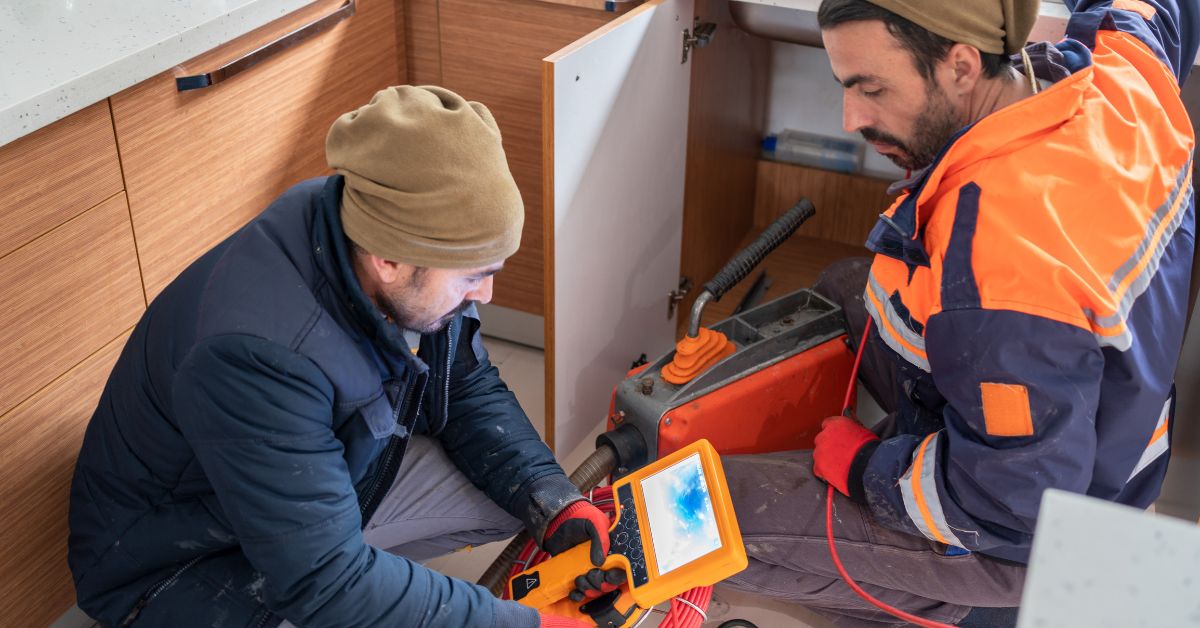
- Camera inspection. A sewer camera inspection shows the actual cause — roots, grease, a cracked or sagging section, or a foreign object — and exactly where it is. This is what separates a diagnosis from a guess.
- Clearing the line. Based on what the camera shows, the line is cleared by snaking, hydro jetting, or both (compared below).
- Follow-up camera pass. A second look after clearing confirms the line is actually open and shows whether there’s structural damage that needs a separate repair conversation.
- Flow test. Every affected fixture is run to confirm normal drainage is back — not just the one nearest the cleanout.
Snaking vs. hydro jetting: what’s the real difference?
Both are legitimate tools. A good technician uses the camera to choose between them rather than defaulting to one.
- Snaking uses a rotating cable — motorized for main lines — to cut through or pull out a blockage. It’s fast and works well for many clogs, including cutting back roots, but it mainly opens a channel through the obstruction rather than cleaning the whole pipe wall.
- Hydro jetting sends high-pressure water through a specialized nozzle to scour the inside of the pipe along its full length, removing grease, scale, and leftover debris — not just the spot where the clog was. It’s often the better choice for recurring clogs, grease-heavy lines, or as a follow-up after roots have been cut back.
Neither is “better” across the board. The camera inspection is what tells you which one fixes your problem instead of relieving the symptom for a few weeks. Learn more about professional hydro jetting.
What drives the cost of clearing a main line backup
There’s no single price that fits every backup, because the cost follows the same variables that decide the fix:
- Where the clog is — close to an accessible cleanout, or far down the line toward the street
- What it takes to clear — snaking, hydro jetting, or both
- Whether a camera inspection is needed to find a root cause, versus a simple blockage
- Whether the camera finds structural damage that calls for sewer line repair or, in worse cases, sewer line replacement
- Timing — after-hours and weekend calls typically cost more than scheduled visits
Before anyone is dispatched, it’s fair to ask what the first visit includes and whether a diagnostic or trip fee applies. You can also check our current LA plumbing promotions for active offers.
When drains backing up at once is an emergency
Don’t wait for a scheduled appointment if any of these apply:
- Sewage is coming up into a tub, shower, or floor drain inside the home
- More than one bathroom is unusable at the same time
- There’s a strong sewage smell anywhere in the house
- The backup is affecting a working commercial kitchen, a restroom, or an occupied rental unit
These situations come up in real calls all the time. One tenant called us about a blockage affecting every toilet in the house and a shower — all at once. A restaurant manager called with a floor drain and a dish sink backed up together, which takes part of a working kitchen offline. In both cases the issue wasn’t a slow drain someone could live with for a few days; something essential was out of service until the line was cleared. That’s why it’s worth saying clearly when you call that more than one fixture is affected — it changes how urgently the job should be scheduled. For after-hours situations, our 24/7 emergency plumbing team is the fastest route.
The bottom line
One clogged sink is an inconvenience. Several drains backing up at once is a shared-line problem, and treating it like a single clog — plunging one toilet, pouring drain cleaner down one sink — wastes time while the real blockage stays put. The fastest path to a lasting fix is a camera inspection to confirm the cause, followed by the method that actually addresses it.
If more than one drain in your home or business is backing up right now, The 5 Star Plumbing’s sewer, drain, and rooter team can find the cause and clear it, with service across Los Angeles and Orange County. Contact our licensed plumbers to schedule a visit.
Frequently asked questions: drains backing up at once
Why are all my drains backing up at once instead of just one?
Every drain in a home connects to one shared main sewer line before it leaves the property. If that line is blocked, water has nowhere to go, so the backup shows up at several fixtures at the same time — usually the lowest drains first, such as a ground-floor tub, shower, or the toilet closest to the main line.
Why does my toilet gurgle when I run the sink or washing machine?
Gurgling is air being pushed back through the drain system because a shared line downstream is partly blocked. It’s one of the earliest and most reliable signs of a main line problem, and it often shows up before a full backup does.
Is a multi-drain backup always the main sewer line?
Not always, but it’s the most common explanation. One slow sink is usually a local clog in that fixture’s trap or branch line. Two or more fixtures backing up together, especially the lowest ones in the house, points strongly to the main line or a branch line that serves several fixtures.
What causes main sewer line clogs in Los Angeles?
The most common causes are tree roots getting into older clay or cast iron sewer laterals, grease and buildup collecting over years of use, and cracked or sagging sections of older pipe. Wipes and other non-flushable items cause many sudden, complete blockages.
Can I clear a main line clog myself?
A small consumer snake can sometimes clear a soft blockage near a cleanout, but a true main line clog — especially one involving roots or years of buildup — usually needs a motorized sewer snake or hydro jetting, plus a camera to confirm the cause. DIY attempts can push debris further down the line or miss a structural problem entirely.
What’s the difference between snaking and hydro jetting?
Snaking uses a rotating cable to break through and clear a path past a clog. Hydro jetting uses high-pressure water to scour the full inside of the pipe, removing grease, scale, and debris along the whole line, which is why it’s often used for recurring clogs or after roots have been cut back.
Do I need a sewer camera inspection?
For a one-time, easily cleared clog, not always. For a backup that affects several fixtures, keeps coming back, or might involve roots or pipe damage, a camera inspection is the only way to see the actual cause and its exact location instead of guessing.
How much does it cost to clear a main sewer line backup?
It depends on where the clog is, how severe it is, and whether it needs snaking, hydro jetting, or a camera inspection first — there’s no single number that fits every home. Ask for a clear breakdown of what’s included before work begins.
What should I do right now if several drains are backing up?
Stop running water into any drain in the house, including the dishwasher and washing machine, because additional water has nowhere to go. If sewage is coming up into a tub, shower, or floor drain, treat it as a plumbing emergency and call a professional promptly.
Is a sewage backup a health hazard?
Yes. Wastewater that comes into a living space through a floor drain, tub, or toilet is a sanitation concern, not just an inconvenience. Avoid contact, keep children and pets away, and have it cleaned up properly if sewage has reached a finished area.
Will the backup keep happening if the cause isn’t found?
Often, yes. If the underlying cause — roots, structural damage, or heavy buildup — isn’t identified and addressed, a quick snake-through may only give short-term relief before the same fixtures back up again. A camera inspection at the time of service is what breaks that cycle.
Sources: Los Angeles County Sanitation Districts — Sewer Backup Prevention Contact & Resources