Rinnai is one of the most common tankless and gas water heater brands we service across Los Angeles and San Francisco. Most Rinnai problems fall into a handful of categories: no hot water, temperature swings, unusual noise or smell, leaks, error codes, or a unit that just won’t maintain performance the way it used to. Below we’ve answered the questions homeowners ask us most often about Rinnai water heaters, organized by symptom so you can jump straight to your issue.
No Hot Water or Not Heating Properly
Why Is My Rinnai Water Heater Not Producing Hot Water?
Start by checking the power supply and gas supply. Make sure the unit is plugged in and the circuit breaker hasn’t tripped. If it’s gas-powered, verify the gas valve is open. Next, check the thermostat — it should be set to a temperature high enough to actually heat the water. If none of that resolves it, the problem is likely a faulty heating element or malfunctioning thermostat, which needs a professional diagnosis.
Why Won’t My Rinnai Water Heater Ignite?
A unit that won’t ignite usually points to a faulty igniter, a gas supply problem, or a blocked vent. A defective thermocouple or a closed gas valve can also be the culprit. If you’ve checked these and it still won’t ignite, it’s time to call a professional rather than keep troubleshooting.
Why Is My Water Heater Not Powering Up At All?
A tripped circuit breaker, malfunctioning thermostat, or faulty heating element can all cause this. Gas supply issues, a defective ignition system, or an unplugged/switched-off unit are also common causes. In some cases, the problem is internal electrical wiring, which is not a DIY fix.
Why Isn’t My Rinnai Producing Enough Hot Water?
This is often a malfunctioning thermostat, sediment build-up in the tank, or a worn heating element. It can also mean the unit is undersized for your household’s demand, or there’s a gas supply or pressure issue. Regular maintenance helps, but a unit that’s consistently falling short needs a professional look.
Why Is My Water Heating Slowly?
Sediment build-up in the tank is the most common cause — it reduces the efficiency of the heating element. A faulty thermostat or heating element can also slow recovery time. If your unit is older, this can simply be a sign it’s reaching the end of its service life.
Temperature & Overheating Issues
How Do I Adjust the Temperature on My Rinnai Water Heater?
Locate the control panel on the front of the unit, press the “Priority” button, then use the “Up” and “Down” arrows to set your desired temperature. We recommend 120°F — hot enough for comfort, low enough to prevent scalding and save energy. Press “Priority” again (or “Save,” depending on your model) to lock in the change.
Why Won’t My Water Heater Maintain a Steady Temperature?
Inconsistent temperature is usually a faulty thermostat, sediment build-up, or an issue with the gas supply. Older units also lose efficiency over time simply from wear. Regular maintenance and timely repairs go a long way toward keeping the temperature steady.
Why Is My Water Heater Overheating?
A faulty thermostat, sediment build-up inside the tank, or a malfunctioning heating element are the usual suspects. Sediment can insulate the water from the heater’s sensors, tricking it into overheating. This should be addressed quickly — overheating puts real strain on the tank and its components.
Why Won’t My Water Heater Turn Off?
A faulty thermostat, malfunctioning gas control valve, or defective high-limit switch are the most likely causes. Wiring or circuitry issues can also be behind it. A unit that won’t shut off is a safety and efficiency issue — don’t let it run indefinitely.
Why Does My Water Heater Run Constantly?
A faulty thermostat that isn’t regulating temperature correctly, sediment build-up forcing the unit to work harder, or a leak causing constant refilling and reheating are the three most common explanations. Diagnosing which one it is matters — treating the wrong cause won’t fix a rising energy bill.
Water Quality — Odor, Discoloration & Sediment
Why Does My Rinnai Water Heater Smell?
An unpleasant smell is usually bacteria in the water or a problem with the anode rod. Flushing the water heater to clear out bacteria is the first step; if the smell persists, the anode rod likely needs replacing.
Why Does My Water Smell Like Sulfur or Rotten Eggs?
This is a classic sign of bacteria reacting with the magnesium anode rod, producing hydrogen sulfide gas — the source of that rotten-egg smell. Flushing the system and replacing the anode rod usually resolves it. If the smell comes back quickly, there may be a larger issue that needs a professional look.
Why Is My Hot Water Rusty or Discolored?
Corrosion inside the tank — often from a failing anode rod — is the most common cause. Sediment build-up can also discolor water. Regular tank maintenance and flushing help prevent this, but persistent discoloration is worth a professional diagnosis before it gets worse.
Noise, Leaks & Pressure Problems
Why Is My Rinnai Water Heater Making Noise?
Popping or rumbling sounds usually mean sediment build-up in the tank — trapped water boils and creates the noise. It can also signal a faulty heating element or a problem with the pressure relief valve. Regular maintenance prevents most of this; persistent noise after flushing warrants a professional inspection.
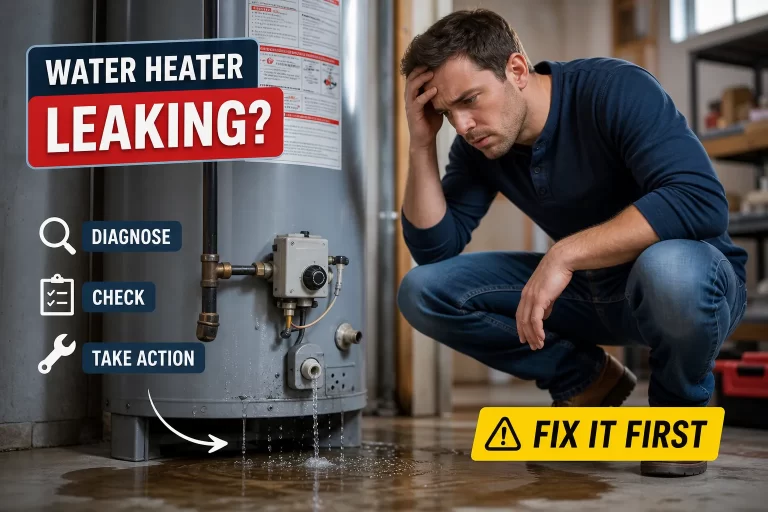
What Should I Do If My Water Heater Is Leaking?
Turn off the water supply immediately to limit damage. Try to identify the source — the tank itself, the pressure relief valve, or the drain valve are the usual spots. If you can’t pinpoint it or the leak continues, call a professional right away. A leaking water heater left unattended can cause serious water damage.
What Causes Low Water Pressure?
A blocked inlet screen, malfunctioning pressure relief valve, or clogged pipe are common culprits. An incorrectly sized unit for your household, a damaged dip tube, or sediment build-up in the tank can also cause this. If you’re dealing with persistent low pressure, it may be time to talk through a water heater replacement rather than repeated fixes.
Why Does My Water Heater Keep Tripping the Breaker?
A faulty heating element, an internal short circuit, or an overloaded circuit are the most common causes. A worn-out breaker or an incorrectly sized breaker for the unit can also be the issue. This is an electrical safety concern — don’t just keep resetting the breaker without having it looked at.
Error Codes, Remote & Venting
What Do Rinnai Error Codes Mean?
Check your user manual or Rinnai’s manufacturer site for the specific code — it will tell you what the unit detected. Some issues clear with a simple reset, cleaning the filter, or checking the gas supply. If the code keeps returning after you’ve tried the basics, it’s time for a professional diagnosis.
Why Isn’t My Remote Control Working?
Dead batteries are the most common cause — check and replace them first. If that doesn’t fix it, the remote itself may be malfunctioning, or the receiver inside the water heater could be faulty. A faulty receiver requires professional repair.
How Do I Inspect the Venting System?
With the unit off and cooled down, visually inspect the vent pipe for damage or blockage, and check the vent termination outside your home for obstructions. Any sign of damage or blockage should be addressed immediately — a compromised vent can lead to carbon monoxide leaks. If you’re not fully comfortable doing this yourself, have a professional check it.
Maintenance & Care
How Do I Clean the Burner?
With the unit off and fully cooled, remove the front panel to access the burner. Use a soft brush or vacuum to gently remove dust and debris without damaging the burner. Replace the panel and power the unit back on. Check your manual for model-specific steps, or have a professional handle it.
How Often Should I Flush the Heat Exchanger?
At least once a year to prevent mineral deposits from building up and reducing efficiency. If your water has high mineral content, more frequent flushing is worth considering. Check your manual for model-specific guidance.
How Do I Clean the Water Filter?
Turn off the water supply, locate the filter at the unit’s inlet, and remove it. Rinse thoroughly under running water, using a soft brush if needed to clear debris, then reinstall and turn the water supply back on.
How Do I Check the Gas Supply?
Confirm the gas valve is in the “ON” position, then check the gas pressure with a manometer. Pressure that’s too low won’t heat water adequately. If you’re unsure about any part of this process, have a professional check it for you.
What Are the Signs I Need a New Thermostat?
Water that won’t reach the desired temperature, fluctuates between hot and cold, or a unit that runs continuously or won’t turn on are all signs. A sudden jump in your energy bill is another indicator. These issues are worth addressing quickly before they cause further damage.
How Can I Tell If My Water Heater Needs Servicing?
Watch for decreased or inconsistent hot water temperature, unusual rumbling or popping noises, visible leaks, an error code on the display, or an unexplained increase in your energy bill. Any one of these is a good reason to schedule service before a small issue becomes a bigger repair.
How Do I Protect My Water Heater From Freezing?
Insulate the unit well — a water heater blanket or insulation kit from any home improvement store works well. Keep it in a warm location, avoid installing it somewhere prone to freezing, and if it won’t be used for a while, drain the water completely to prevent freeze damage.
General Maintenance Best Practices
Schedule an annual professional inspection to catch small issues before they become expensive ones. Check the pressure relief valve and anode rod regularly. Keep the area around the unit clean and clear for proper ventilation, and flush the tank at least once a year to clear sediment. Always check your manual for model-specific requirements.
How Much Does Rinnai Water Heater Repair Cost?
Most minor repairs — filter cleaning, burner cleaning, thermostat adjustments — run $100–$250. More involved repairs like a heating element, gas control valve, or venting issue typically run $250–$500. If your unit is older and facing multiple issues at once, it’s often more cost-effective to discuss a water heater replacement instead of repeated repairs.
Work with Rinnai Water Heater Experts
Whether it’s a stubborn error code, a unit that won’t ignite, or water that just won’t get hot, our licensed plumbers have the experience to diagnose Rinnai systems correctly the first time. We handle everything from routine maintenance to full tankless water heater repair and installation across the Los Angeles and San Francisco areas.
Contact The 5 Star Plumbing today to schedule service or get a straightforward estimate on your Rinnai water heater repair.