
For many homeowners in Los Angeles and Orange County, the toilet is the “forgotten” appliance. We use it dozens of times a day without a second thought—until the day it fails. Usually, that failure starts as a minor annoyance: a handle that needs jiggling, a slow-running leak, or a phantom flush in the middle of the night.
Your first instinct is likely to call a plumber for a quick fix or head to the hardware store for a $15 replacement flapper. However, there is a fine line between a simple maintenance task and a “money pit” scenario. While most internal components are replaceable, the porcelain throne itself has a definitive lifespan. Continuing to repair an obsolete or damaged unit can lead to catastrophic water damage, skyrocketing utility bills, and constant frustration.
How Long Do Toilets Last?
Technically, a well-made porcelain toilet can last 50 years or more. However, “lasting” and “functioning efficiently” are two very different things. While the porcelain shell is durable, the internal mechanics, the seals, and the efficiency standards of the plumbing industry change rapidly.
The working life expectancy of a toilet is approximately 25 years, depending on maintenance and water quality. However, many households choose to replace theirs every 10 to 15 years during bathroom renovations or to take advantage of new water-saving technology.
5 Clear Signs It’s Time for a New Toilet
1. Cracks in the Tank or Bowl
The most immediate and non-negotiable reason to replace a toilet is a compromise in the porcelain. Porcelain is durable, but it isn’t invincible. Over time, house settling or heavy impacts can cause hairline fractures.
The Danger: A crack in the tank can eventually burst, sending gallons of water onto your floor in seconds. A crack in the bowl is equally dangerous, as it can leak sewer gases into your home or lead to structural failure while in use.
The Dye Test: If you suspect a crack but can’t see it clearly, add some dark food coloring to the tank water. If you see colored water seeping out onto the floor or appearing on the exterior of the porcelain, the structural integrity is gone.
2. Excessive Clogging
The occasional clog is a fact of life, but if your toilet clogs more than once a week or seemingly at random, the problem is likely the fixture itself.
Mineral Buildup: In areas like Van Nuys and Santa Monica where hard water is common, calcium and scale build up inside the toilet’s “trapway.” This narrows the passage and creates a rough surface that catches debris.
Dated Low-Flush Technology: Toilets from the mid-90s were often poorly designed “low-flow” models that lacked the gravitational force to clear the bowl, often requiring two or three flushes to get the job done.
3. High Water Bills and Inefficiency
One of the strongest arguments for a new toilet isn’t about breakage—it’s about the math. Toilets are the single largest source of water consumption in the average home.
Older Models (Pre-1994): These can use a staggering 3.5 to 7.0 gallons per flush (GPF).
Modern Standards: Modern standard toilets use 1.6 GPF, while high-efficiency WaterSense models use only 1.28 GPF.
By upgrading, the average family can save over 13,000 gallons of water per year, allowing the new toilet to pay for itself in utility savings.
4. Constant Running and Failed Repairs
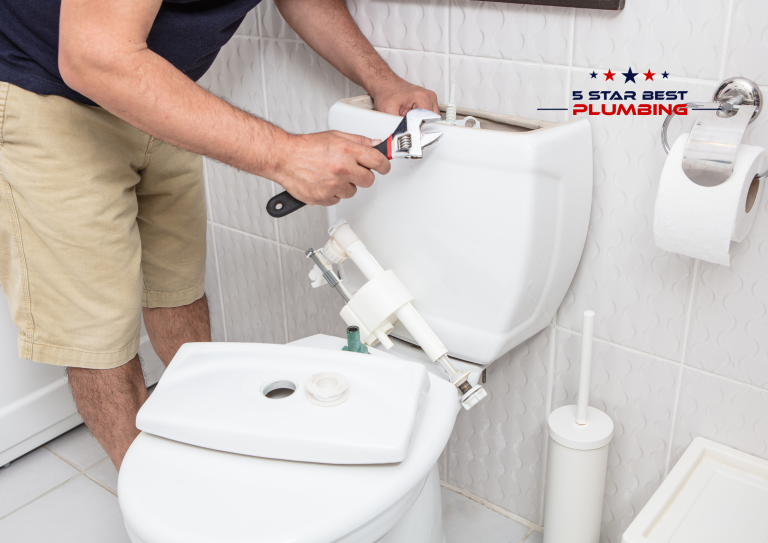
A running toilet is often a sign of a broken flapper valve or a faulty float, which are easy DIY fixes. However, if the toilet continues to run after you’ve replaced the internal components, you may be looking at a more serious internal issue. If you’ve called a plumber multiple times to fix the same “running” issue, the cost of parts and labor will quickly exceed the cost of a brand-new, reliable unit.
5. Surface Scratches and Hygiene Issues
As porcelain ages, the protective glaze wears down from years of scrubbing. Once the glaze is gone, the porcelain becomes porous.
It collects deep stains that won’t scrub away.
It harbors bacteria and odors that linger regardless of how much bleach you use.
If your toilet looks “dirty” immediately after a deep clean, the protective surface is permanently gone.
Repairing vs. Replacing: The Decision Guide
Not every faulty toilet needs to be tossed, but if you identify with two or more of the following points, it is time to shop for a new model:
The bowl or tank has visible cracks.
The toilet clogs more than once a week.
The toilet was manufactured before 1994.
You have replaced the internal parts more than twice in the last year.
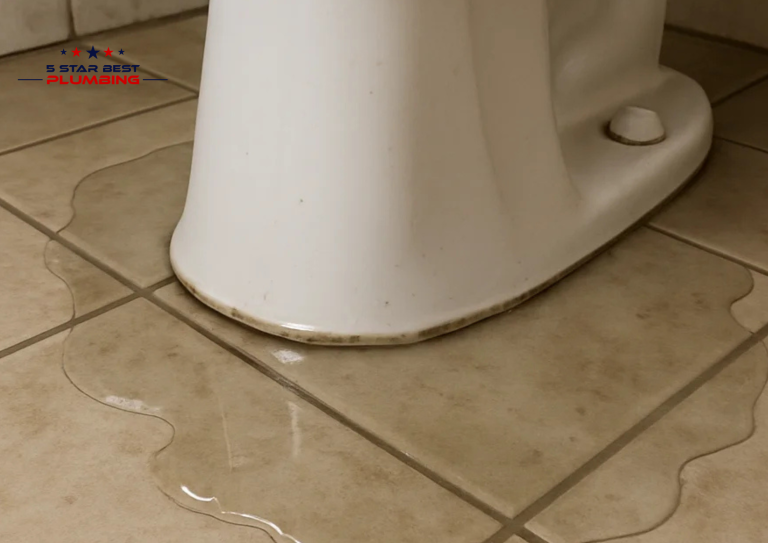
The toilet leaks from the base (indicating a failed wax ring or cracked flange).
Your water bill is unusually high compared to previous years.

Why Professional Installation Matters
While a toilet replacement might look like a simple weekend project, a single mistake with the wax ring or the flange can lead to slow, hidden leaks that rot your subfloor.
At 5 Star Best Plumbing, our licensed professionals ensure:
A Perfect Seal: To prevent water damage and sewer gas leaks.
Proper Leveling: To ensure the toilet doesn’t rock, which can break the seal prematurely.
Comprehensive Inspection: We check your water lines and shut-off valves to ensure your entire system is up to code.
Don’t wait for a major leak to ruin your bathroom flooring. Whether you’re in Los Angeles, Orange County, Santa Monica, or Riverside, 5 Star Best Plumbing is ready to help you upgrade to a high-efficiency, reliable toilet. Contact us today to schedule your professional toilet installation and ensure your home stays leak-free.
FAQs
How long should a toilet last?
A standard toilet lasts about 25 years. While the porcelain can endure longer, the internal mechanics and water efficiency usually become obsolete after two decades.
Can a cracked toilet bowl or tank be repaired?
No. Porcelain cannot be reliably patched to hold water pressure or body weight. A cracked toilet is a major flood risk and must be replaced immediately.
Is it cheaper to repair or replace a toilet?
If repairs exceed $150 or if the toilet is over 20 years old, replacement is cheaper in the long run. Modern toilets save the average family over 13,000 gallons of water annually.
Why does my toilet keep running after a repair?
If a new flapper doesn’t stop the leak, you likely have a corroded flush valve seat or an internal bypass issue. In older models, it is often more cost-effective to upgrade the entire unit.
What is a "Comfort Height" toilet?
These models sit 2 inches higher than standard toilets (chair height). They are highly recommended for better accessibility and are easier on the knees and back.