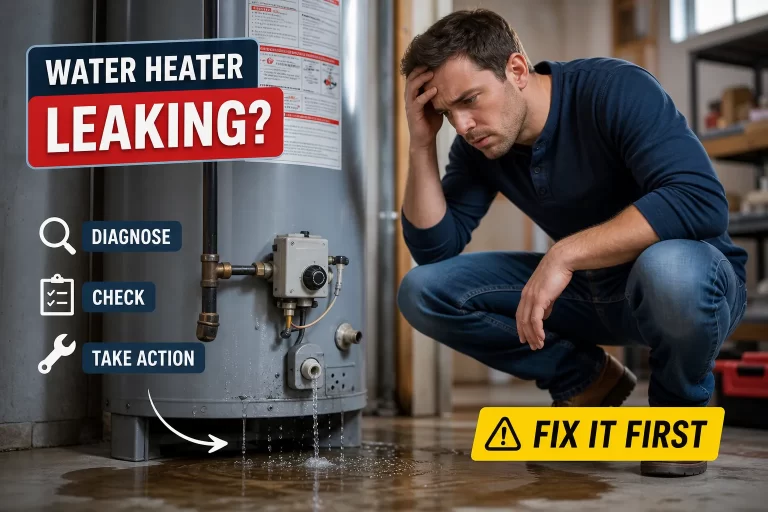
A water heater failing is one of those problems that never picks a convenient time. Whether it’s no hot water on a cold morning, a puddle forming near the tank, or strange noises coming from the unit, knowing what’s actually wrong — and what it will take to fix it — makes the whole situation less stressful. This guide covers the signs that mean it’s time for repair, what’s different about fixing electric versus gas units, what repairs typically cost, and how to choose a repair company you can trust.
Signs You Need Water Heater Repair
Most water heater problems show a few unmistakable warning signs before they become emergencies. Keep an eye out for:
- No hot water or insufficient hot water — often a failed heating element, a tripped thermostat, or (for gas units) a pilot light or gas valve issue.
- Water leaking around the tank — can mean a failed pressure relief valve, loose fittings, or a cracked tank (the last one usually means replacement, not repair).
- Strange noises — popping or rumbling sounds usually point to sediment buildup at the bottom of the tank, which insulates the heating element and makes it work harder.
- Discolored or rusty water — can indicate a corroding anode rod or, in older tanks, the tank itself starting to rust from the inside.
- Inconsistent temperature — water that’s too hot, too cold, or fluctuates mid-shower usually traces back to a faulty thermostat or, on gas units, an improperly adjusted gas valve.
- Low hot water pressure — often sediment or mineral buildup restricting flow, especially in hard-water areas.
Ignoring these signs doesn’t make them go away — it usually means a bigger repair bill (or a full replacement) down the line.
Safety First: Before You Touch Anything
Whether you’re troubleshooting yourself or waiting for a technician, take these precautions first:
- Electric water heaters: switch off power at the breaker box before inspecting or working on the unit.
- Gas water heaters: turn the gas control valve to “off” before doing anything else — never attempt gas line or valve repairs yourself.
- Both types: close the cold-water inlet valve to depressurize the tank before disconnecting anything.
Any repair involving the gas line, venting, or the tank itself should go to a licensed professional — the risk of a gas leak or scalding water isn’t worth a DIY attempt.
Electric Water Heater Repair
Electric units most commonly fail from sediment buildup insulating the heating element, a burned-out heating element itself, or a thermostat malfunction that either stops heating altogether or overheats the water. A licensed technician will typically test the elements and thermostat with a multimeter, flush the tank to clear sediment, and replace failed parts — a heating element swap is usually a same-day fix.
Gas Water Heater Repair
Gas units add a few failure points electric units don’t have: a pilot light that won’t stay lit, a faulty thermocouple or igniter, a malfunctioning gas control valve, or venting issues. Because these involve combustion and gas lines, gas water heater repairs carry real safety stakes — a technician will check for gas leaks, verify proper venting, and test the gas valve and thermocouple before any parts are replaced.
What Water Heater Repair Costs
Repair costs vary by what’s actually broken, but as a general guide: minor fixes (a new thermostat, heating element, pilot assembly, or pressure relief valve) typically run in the $150–$600 range, while more involved repairs or replacement of major components can run $600–$1,200+. If the tank itself has failed or corroded through, full replacement — typically $800–$2,500+ depending on unit type and installation complexity — usually makes more financial sense than repair. Labor rates and parts costs vary by region, so treat these as a starting point rather than a quote; a technician can give you an accurate number after diagnosing the actual problem.
Repair vs. replace: as a rule of thumb, if your water heater is under 6-8 years old and the repair is a single component (thermostat, element, valve), repair is usually the better value. If the unit is past 10-12 years old, has a corroding tank, or the repair estimate approaches half the cost of a new unit, replacement is typically the smarter long-term choice.
How to Choose a Water Heater Repair Company
Not all repair companies are equal, and a bad repair can cost you more in the long run. Before hiring anyone, check for:
- Licensing and certification — verify the technician and company are properly licensed in your state; this protects you legally and reflects real training.
- Experience with your specific unit — tankless, traditional tank, electric, and gas units each require different expertise.
- Insurance coverage — protects you if something goes wrong during the repair.
- Transparent quotes — get the estimate in writing before work begins; be wary of anyone unwilling to explain the price breakdown.
- Warranties on parts and labor — a reputable company stands behind its repair work.
- Real customer reviews — recent reviews are a better signal than a polished sales pitch.
What to Expect During a Repair Visit
A qualified technician will typically: diagnose the issue by inspecting the tank, testing electrical components or gas valve function, checking for leaks and corrosion, and confirming whether repair or replacement makes sense before starting any work. Most straightforward repairs (elements, thermostats, valves) are completed same-day.
Preventive Maintenance to Avoid Future Repairs
- Flush the tank annually to clear sediment buildup, especially in hard-water areas.
- Test the pressure relief valve yearly to confirm it’s functioning.
- Check the anode rod every 2-3 years and replace it if heavily corroded — it protects the tank from rusting.
- Keep the area around the unit clear for proper ventilation (gas units especially).
- Schedule an annual inspection with a licensed plumber to catch small issues before they become expensive ones.
Frequently Asked Questions
Can I repair my own water heater?
Simple tasks like flushing sediment or testing the pressure relief valve are DIY-friendly if you follow proper safety precautions. Anything involving the gas line, electrical wiring, or the tank itself should go to a licensed professional.
How long does a typical repair take?
Most single-component repairs (thermostat, heating element, pilot assembly) are completed within a few hours, often same-day.
Is it worth repairing an old water heater?
It depends on the unit’s age and what’s broken. For units under 8 years old with a single failed component, repair is usually worth it. For older units or major failures, replacement is often the better long-term value.
Trust The 5 Star Plumbing With Your Water Heater Repair
No matter the type or brand of water heater you have — traditional tank, tankless, electric, or gas — our licensed, certified technicians can diagnose the problem and get your hot water back quickly. Give us a call and we’ll dispatch a qualified specialist to help.